I recently purchased a Bible. I wish I had chosen one that included the Apocrypha. I would love to have it at hand for no other reason than to read the Wisdom of Ben Sirach. There is much in Ben Sirach that could help us live as noble people.
In my studies of Ephesians 5 today I was trying to unravel the meaning of the word rebuke (vss. 11-13). I am concerned that "rebuking" is too often regarded as something of a bloodsport among Christ's people. I imagine that this is due in large part to my homiletical colleagues who understand that a good "rebuking" sermon stirs up the dust and scandal. Unfortunately, there does not seem to be any salutory benefit to bludgeoning people with the error of their ways. Most of the time they tend to know how depraved and destructive their sinfulness truly is.
Besides, the Scriptures do not use the word elegchō with the same quarrelsome, cantankerous gusto that we use its common English translation "rebuke." Instead, the word has the sense of revealing, researching, and discovering the truth. Of course it is implied that this search for the truth will result in proper repentance if there is discovery of sin, but the proper rebuke begins with a desire to understand the truth rather than the arrogant position of moral superiority that pretends that the rebuker is always right and the rebuked is always wrong.
Now here's where Ben Sirach describes how it ought to be done so well. Notice how he assumes that the questioning process assumes two options: 1) I may have misunderstood or been told a lie and I need to get the story straight; or 2) the other person really has done something improper, but the goal of the dialogue is to keep them from doing it again.
I leave you with the wisdom of Ben Sirach 19:13-17 . . .
Question a friend; perhaps he did not do it;
or if he did, so that he may not do it again.
Question a neighbor; perhaps he did not say it;
or if he said it, so that he may not repeat it.
Question a friend, for often it is slander;
so do not believe everything you hear.
A person may make a slip without intending it.
Who has not sinned with his tongue?
Question your neighbor before you threaten him;
and let the law of the Most High take its course.
Tuesday, June 26, 2007


Wednesday, April 25, 2007
Gearing Up For New Studies
This Sunday is Fifth Sunday Family Night at West-Ark. I would really like to see this event become community discussion about our life together as believers. Typically, we give attention to the various needs and activities of the ministries within this church. I am all for that. I do want that to continue. Yet, I am eager to find a way to connect all of this with our faith and theology. My hope is that we will speak of what we do and what we believe as a seamless whole.
Fifth Sunday usually serves as a mile marker for me as I order my preaching and teaching schedule. On Sunday morning I will begin a series based on Ephesians 4 -6. It will continue many of the themes from the sermon that Charles Siburt preached on unity and the 1 Cor. 12 sermon I preached this Sunday.
This year I began teaching in the Sunday evening assembly. Sunday I just finished a nine-part study of the seven classical theological topics: theology, christology, pneumatology, hamartiology, soteriology, ecclesiology, and eschatology. I was amazed that the group on Sunday evening received this so well.
I was stumped about our next study, until the eschatology lesson reminded me that I have never studied Daniel in any in-depth way. I have to admit that I read the whole book straight through for the first time that I can recall. I can see why the last part of this book can lead to a lot of misunderstanding. I understand why it is a field bed for all sorts of bizarre scenarios about the end of the world. I also observe that the language of Daniel 7-12 is foundational to the Gospels and especially Jesus' identity as the Son of Man. I look forward to this discussion.
Fifth Sunday usually serves as a mile marker for me as I order my preaching and teaching schedule. On Sunday morning I will begin a series based on Ephesians 4 -6. It will continue many of the themes from the sermon that Charles Siburt preached on unity and the 1 Cor. 12 sermon I preached this Sunday.
This year I began teaching in the Sunday evening assembly. Sunday I just finished a nine-part study of the seven classical theological topics: theology, christology, pneumatology, hamartiology, soteriology, ecclesiology, and eschatology. I was amazed that the group on Sunday evening received this so well.
I was stumped about our next study, until the eschatology lesson reminded me that I have never studied Daniel in any in-depth way. I have to admit that I read the whole book straight through for the first time that I can recall. I can see why the last part of this book can lead to a lot of misunderstanding. I understand why it is a field bed for all sorts of bizarre scenarios about the end of the world. I also observe that the language of Daniel 7-12 is foundational to the Gospels and especially Jesus' identity as the Son of Man. I look forward to this discussion.
Thursday, April 19, 2007
Defining Reality
Krista Tippett writes the following on the Speaking of Faith webpage . . .
As perpetually horrified as we are of terror and violence, we are riveted by them and we let them define our take on reality. The communications miracles of the 21st century make wondrous connections possible, and yet they also bring us images of horror with an immediacy and vividness that are debilitating. Violent images seem altogether more solid and substantial, more decisive and telling, somehow, than kindness, goodness, and lived peace. It is easy to bow down before these images and give in to the despair they preach.
Tomorrow we will be reminded of the Columbine shooting. The connections between Columbine and Virginia Tech will be drawn. The connections to Waco and the OKC bombing may even enter the discussion. We need to remember. We need to pray for the families and those who have been wounded in so many ways. It is altogether proper to grieve, but let's not give in to despair. The shooters and bombers may have commanded the attention of the media camera, but they do not have the power to define reality.
As perpetually horrified as we are of terror and violence, we are riveted by them and we let them define our take on reality. The communications miracles of the 21st century make wondrous connections possible, and yet they also bring us images of horror with an immediacy and vividness that are debilitating. Violent images seem altogether more solid and substantial, more decisive and telling, somehow, than kindness, goodness, and lived peace. It is easy to bow down before these images and give in to the despair they preach.
Tomorrow we will be reminded of the Columbine shooting. The connections between Columbine and Virginia Tech will be drawn. The connections to Waco and the OKC bombing may even enter the discussion. We need to remember. We need to pray for the families and those who have been wounded in so many ways. It is altogether proper to grieve, but let's not give in to despair. The shooters and bombers may have commanded the attention of the media camera, but they do not have the power to define reality.
Tuesday, March 13, 2007
Green Acres
I found an intriguing blog today. It's all about a man with three kids, a red tractor, and 170 acres. There is no intense drama or gripping plot to Joel Comb's Life on a Farm, in fact it is mundane in the real sense of the word - it's earthy.
Joel sets out to tell us where our food comes from. It doesn't come from the back room of the grocery store or the magic happy place where bacon is conjured up. It comes from the earth. It is grown, herded, and harvested by the sweat of the brow - though not always our own brow anymore.
As Joel tells his everyday stories, he gets into all the familial and financial details. His kids get the flu. His tractor breaks and he needs $400 to repair it. That's earthy.
There are many days that I suffer from Green Acres Syndrome. Like Oliver Douglas, I want to escape the rat race of the city and work in the soil with my hands like the American farmer. Thanks to Joel Combs, I can appreciate what modern farming is really about but I know that the grass is not necessarily greener on a farm in Pine Knot, Kentucky.
Joel sets out to tell us where our food comes from. It doesn't come from the back room of the grocery store or the magic happy place where bacon is conjured up. It comes from the earth. It is grown, herded, and harvested by the sweat of the brow - though not always our own brow anymore.
As Joel tells his everyday stories, he gets into all the familial and financial details. His kids get the flu. His tractor breaks and he needs $400 to repair it. That's earthy.
There are many days that I suffer from Green Acres Syndrome. Like Oliver Douglas, I want to escape the rat race of the city and work in the soil with my hands like the American farmer. Thanks to Joel Combs, I can appreciate what modern farming is really about but I know that the grass is not necessarily greener on a farm in Pine Knot, Kentucky.
Thursday, March 08, 2007
Big
While following the various NCAA conference championships in preparation for March Madness, I noticed how many of the NCAA conferences are "big." Six conferences make this claim: the Big East, the Big West, the Big South, the Big Ten, the Big Twelve, and the Big Sky. My question is, "What really makes them so big?"
I will begin my examination with the Big Sky conference. This conference can legitimately claim the word "big," but only if they include the reference to the sky. The sky is rather big out there on the plains where these schools are located. They did not invent the name "Big Sky." They just borrowed it. They are not the only ones to use the title "Big Sky." Big Sky Airlines operates out of Montana. Big Sky Ski Resort is located in Big Sky, Montana. Then there's the 1950's Kirk Douglas movie "The Big Sky." The Big Sky Conference is not trying to tell us how large or how great they are. They are just trying to tell us from whence they come. That's fair.
However, this isn't really the case with all the conferences pointing to "big" points on the compass. Where exactly is Big West, Big East, and Big South? Do you have to find Big Magnetic North with your Big Compass and then divide the dial into Big ninety-degree angles?
What makes the Big South so big? There are a number of NCAA conferences that connect themselves with the southern United States. The SEC, the Southern, the SWAC, and even the Southland conferences all have more members than the Big South. Likewise, the Big West is not any larger than the West Coast conference and just slightly smaller, in terms of member colleges, than the Western Athletic Conference. On the other hand, the Big East is bigger than the other conferences in the east. They deserve their name. It seems natural. Imagine some guys talking about these conferences long ago before they ever had names . . .
One fellow says, "How 'bout that athletic conference out east?"
"Which one?" his friend replies, "There's five or six of 'em."
"Oh, you know," says the first guy, "That big one out east with all them schools."
"Oh yeah," says the first fellow, "How 'bout that. They sure are big."
This conversation makes sense. The name Big East sticks. But it doesn't work where the other conferences are concerned. Let's drop in again on the conversation . . .
"How 'bout that athletic conference down south?"
"Which one? There's 'bout five or six of them."
"Oh, you know, the big one."
"You mean, one of the three big enough to have a north and south division?"
"No, not those! The other one. The big one - in the south."
"You mean one of them with schools in Texas? Texas is a big state in the south."
"No, no! Not those! This one don't have no schools in Texas. I mean the big one! The one that has that school Jerry Falwell runs. They got a champion Quiz Bowl team."
"What are you talking about? That conference ain't big at all."
Now when it comes to the Big Ten and Big Twelve, my literal-brained fussiness says that Twelve is bigger than Ten. But I could see where a Ten could be big as far as Ten's go. So perhaps they should change their name to the Relatively Big Ten Conference. Or if they insist on sticking with Big Ten, then I would think that the Big Twelve would need to change their name to the Bigger Twelve Conference.
But what makes the Big Twelve so big? There are plenty of conferences with twelve schools. Likewise with ten-school conferences. If the Big Twelve is big then are we to assume that the Conference USA could be the Little Twelve or the Medium-Sized Twelve? Should we rename the Missouri Valley as the Average-Sized Ten or the Petite Ten?
I hope you see the problem. Some have thrown the adjective "big" around too freely. But what's stopping anyone? If your conference has ten or twelve schools then you've missed out. You weren't the first to claim "bigness." But if your conference calculates a different member total then get with it! The Sun Belt and Horizon Conferences should pay attention here and rename themselves the Big Thirteen and the Big Nine. No one but me is counting, so you can be as big as you like.
I will begin my examination with the Big Sky conference. This conference can legitimately claim the word "big," but only if they include the reference to the sky. The sky is rather big out there on the plains where these schools are located. They did not invent the name "Big Sky." They just borrowed it. They are not the only ones to use the title "Big Sky." Big Sky Airlines operates out of Montana. Big Sky Ski Resort is located in Big Sky, Montana. Then there's the 1950's Kirk Douglas movie "The Big Sky." The Big Sky Conference is not trying to tell us how large or how great they are. They are just trying to tell us from whence they come. That's fair.
However, this isn't really the case with all the conferences pointing to "big" points on the compass. Where exactly is Big West, Big East, and Big South? Do you have to find Big Magnetic North with your Big Compass and then divide the dial into Big ninety-degree angles?
What makes the Big South so big? There are a number of NCAA conferences that connect themselves with the southern United States. The SEC, the Southern, the SWAC, and even the Southland conferences all have more members than the Big South. Likewise, the Big West is not any larger than the West Coast conference and just slightly smaller, in terms of member colleges, than the Western Athletic Conference. On the other hand, the Big East is bigger than the other conferences in the east. They deserve their name. It seems natural. Imagine some guys talking about these conferences long ago before they ever had names . . .
One fellow says, "How 'bout that athletic conference out east?"
"Which one?" his friend replies, "There's five or six of 'em."
"Oh, you know," says the first guy, "That big one out east with all them schools."
"Oh yeah," says the first fellow, "How 'bout that. They sure are big."
This conversation makes sense. The name Big East sticks. But it doesn't work where the other conferences are concerned. Let's drop in again on the conversation . . .
"How 'bout that athletic conference down south?"
"Which one? There's 'bout five or six of them."
"Oh, you know, the big one."
"You mean, one of the three big enough to have a north and south division?"
"No, not those! The other one. The big one - in the south."
"You mean one of them with schools in Texas? Texas is a big state in the south."
"No, no! Not those! This one don't have no schools in Texas. I mean the big one! The one that has that school Jerry Falwell runs. They got a champion Quiz Bowl team."
"What are you talking about? That conference ain't big at all."
Now when it comes to the Big Ten and Big Twelve, my literal-brained fussiness says that Twelve is bigger than Ten. But I could see where a Ten could be big as far as Ten's go. So perhaps they should change their name to the Relatively Big Ten Conference. Or if they insist on sticking with Big Ten, then I would think that the Big Twelve would need to change their name to the Bigger Twelve Conference.
But what makes the Big Twelve so big? There are plenty of conferences with twelve schools. Likewise with ten-school conferences. If the Big Twelve is big then are we to assume that the Conference USA could be the Little Twelve or the Medium-Sized Twelve? Should we rename the Missouri Valley as the Average-Sized Ten or the Petite Ten?
I hope you see the problem. Some have thrown the adjective "big" around too freely. But what's stopping anyone? If your conference has ten or twelve schools then you've missed out. You weren't the first to claim "bigness." But if your conference calculates a different member total then get with it! The Sun Belt and Horizon Conferences should pay attention here and rename themselves the Big Thirteen and the Big Nine. No one but me is counting, so you can be as big as you like.
Tuesday, March 06, 2007
Groucho or Spambot?
 Now it's time to play the game sensation that's sweeping the nation! Read the name and ask . . .
Is it a Groucho Marx movie role or a bogus Spambot E-mail name?
1. Tibias Q. Gently
2. Emile J. Keck
3. Rufus T. Firefly
4. Figueroa O. Emery
5. Kriebel H. Stetson
6. S. Quentin Quale
7. Capt. Zongo Savimbi
8. Gentry Q. Seascapes
9. Hugo Z. Hackenbush
10. Auditor U. Crockpot
11. Otis B. Driftwood
12. Lionel Q. Deveraux
13. Hastings L. Roominess
14. Mahle D. Crunk
15. Wolf J. Flywheel
16. J. Cheever Loophole
1. Tibias Q. Gently
2. Emile J. Keck
3. Rufus T. Firefly
4. Figueroa O. Emery
5. Kriebel H. Stetson
6. S. Quentin Quale
7. Capt. Zongo Savimbi
8. Gentry Q. Seascapes
9. Hugo Z. Hackenbush
10. Auditor U. Crockpot
11. Otis B. Driftwood
12. Lionel Q. Deveraux
13. Hastings L. Roominess
14. Mahle D. Crunk
15. Wolf J. Flywheel
16. J. Cheever Loophole
Answers:
Bogus Spambot Email Names: 1, 4, 5, 7, 8, 10, 13, 14
Groucho Marx Movie Roles: 2, 3, 6, 9, 11, 12, 15, 16
Tuesday, February 27, 2007
Roll Tide!
Let's stick with our sports theme . . .
 Reasons Nick Saban left the Miami Dolphins to coach Alabama’s Crimson Tide:
1. He prefers college coaching to pro coaching.
2. Thirty-two million dollars.
3. The chance to affect young people’s lives.
4. Thirty-two million dollars.
5. His heart wasn’t in coaching the Dolphins.
6. Thirty-two million dollars.
7. He and his family really like Alabama.
8. Thirty-two million dollars.
 Reasons Nick Saban left the Miami Dolphins to coach Alabama’s Crimson Tide:
1. He prefers college coaching to pro coaching.
2. Thirty-two million dollars.
3. The chance to affect young people’s lives.
4. Thirty-two million dollars.
5. His heart wasn’t in coaching the Dolphins.
6. Thirty-two million dollars.
7. He and his family really like Alabama.
8. Thirty-two million dollars.
Saturday, February 24, 2007
Basketball Jones
 I just caught the end of the OU vs. Texas basketball game on ESPN U. That was a spirited game. I admit I was pulling for OU since I now live on the Oklahoma border and also because the Arkansas-Texas rivalry is ingrained in my Southwest Conference Athletic DNA. Texas earned their win however and I salute them. It was a good game; and now I am watching the final seconds of LSU vs. Florida. I cannot believe that LSU is going to win this one - they don't even have "Big Baby" on the floor!
This weekend and next weekend hold out the promise of excellent college basketball. All of this is a prelude to March Madness. I am not a sports fanatic, but I love the end of the basketball season for two reasons: nostalgia and hope.
Of all the sports I am most nostalgic about basketball. I remember watching the Razorbacks on TV with my family as a child. We anticipated the nights and weekends when the Hogs would be on TV. It was always one of our major family events. As a teen, I can recall going to Barnhill Arena with my father, grandfather, and friends and getting caught up in the enthusiasm of those days. I don't think they've been able to reproduce the excitement of those days in the new arena - not even during the winning season of 1994.
I am somewhat maddened that Razorback athletics have been mired in rumor and shame over the last few years. Ever since the controversy between Nolan Richardson and Frank Broyles there has been a certain taint to what ought to be good honest diversion. The "Nutt-Malzahn-Mustain" triangle has further tainted what should be a positive turn in UA athletics. Such is the problem with nostalgia, it is too often vulnerable to controversy and scandal. I understand that people have grievances, but it is a shame when the scandal overshadows the sport.
I also love the March Madness season because of hope. Unlike the disappointing and confusing Bowl System in football, the NCAA tourney creates an opportunity for real competition and stunning upsets. It is always possible for #65 in the standings, the ultimate underdog, to come in and win the entire tournament. Someone will say, "Oh, that'll never happen." Please don't make me delineate the difference between possible and probable. Is it probable that any 16th seed will win the whole series? No, but it is always a possibility no matter how slim a chance they have. This tournament is so potentially thrilling because it creates that sort of hope. It is the athletic equivalent of the Year of Jubilee when slaves were set free and debts were cancelled. Jubilee created the possibility of reversal which gave even the humblest of the humble a taste of triumph. Now, if Arkansas can get just a 16th seed and beat the odds my madness will become gladness.
Wednesday, February 21, 2007
Italian Bicycle Companies or Chico Marx Movie Roles?

See if you can guess which of these are Italian bicycle companies and which are Chico Marx movie roles?
1. Corbaccio
2. Ravelli
3. Bianchi
4. Panello
5. Colnago
6. Pirelli
7. Cinelli
8. Binelli
9. Fiorello
10. Bellesi
11. Baravelli
12. Pinarello
1. Corbaccio
2. Ravelli
3. Bianchi
4. Panello
5. Colnago
6. Pirelli
7. Cinelli
8. Binelli
9. Fiorello
10. Bellesi
11. Baravelli
12. Pinarello
Answers:
Itallian Bicycle Companies: 3, 5, 7, 10, 12
Chico Marx Movie Roles: 1, 2, 4, 6, 8, 9, 11
Wednesday, February 14, 2007
Breaking Up With Pluto
In honor of the dark side of Valentine's Day, that is break-ups, I submit the following take on the most cosmic break-up of the previous year.
Ways that the International Astronomical Union might have broken the news to Pluto that it was no longer a planet.
1. It’s not you, you’re a fine planet and we are sure you’ll meet another lucky Union someday.
2. Let’s be honest, you are not the planet we met all those years ago. Maybe we’re a bit shallow but we just love a nice hydrostatically balanced figure in a planet.
3. We’ve given you adequate time and opportunity to improve your elliptical orbit and you just don’t seem to be making any progress.
4. Well, it came down to you and Xena and we just felt that Xena was more of what today’s kids are looking for in a planet.
5. We’re sorry but we just do not understand this whole trans-Neptunian thing you are into.
6. We think you are a negative influence on Charon, Nix, and Hydra. They shouldn’t have to think that everything revolves around Pluto. [Hint: Charon, Nix, and Hydra are Pluto's moons. Get it?]
7. You have a great future ahead of you, but with the economy the way it is we just simply cannot afford a ninth planet.
8. We've heard rumors about you and Venus and the Union has strict guidelines about interplanetary fraternization.
9. You seem to be more frigid lately.
Ways that the International Astronomical Union might have broken the news to Pluto that it was no longer a planet.
1. It’s not you, you’re a fine planet and we are sure you’ll meet another lucky Union someday.
2. Let’s be honest, you are not the planet we met all those years ago. Maybe we’re a bit shallow but we just love a nice hydrostatically balanced figure in a planet.
3. We’ve given you adequate time and opportunity to improve your elliptical orbit and you just don’t seem to be making any progress.
4. Well, it came down to you and Xena and we just felt that Xena was more of what today’s kids are looking for in a planet.
5. We’re sorry but we just do not understand this whole trans-Neptunian thing you are into.
6. We think you are a negative influence on Charon, Nix, and Hydra. They shouldn’t have to think that everything revolves around Pluto. [Hint: Charon, Nix, and Hydra are Pluto's moons. Get it?]
7. You have a great future ahead of you, but with the economy the way it is we just simply cannot afford a ninth planet.
8. We've heard rumors about you and Venus and the Union has strict guidelines about interplanetary fraternization.
9. You seem to be more frigid lately.
Thursday, January 18, 2007
What Is The Gospel?
What is the Gospel? It is forgiveness when I have been foolish. It is clemency when I have been conceited. It is mercy when I have been murderous. It is God’s protection against my self-preservation. It is God doing the impossible and in doing so he makes much more possible.
What is the Gospel? It is the shocking news that God changes what we know. It is hope for childless parents. It is the favor shown to a slick, self-indulgent scoundrel. It is God sticking with the scoundrel and ushering him into a cosmic agenda greater than he could have imagined. It is the blessing of a new, unstained name. It is the vindication of the golden boy who is unfairly criticized and mistreated. It is mercy and provision for jealous critics. It is freedom from tyrants and liberation from captivities that make us less than human.
What is the Gospel? It is God’s forbearance when I have been forgetful. It is God’s extreme patience when I have been downright stupid. It is God’s willingness to listen to my prayers and maybe even be convinced by them.
What is the Gospel? It is God using me to bless others. It is God entrusting an ordinary, average person with the care and protection of precious souls. It is God graciously not “stripping me of rank” when I abuse my authority. It is God not taking me away from my people or taking them away from me. It is God standing close by even when I know I have failed him. It is God cleansing my heart from the scum of sin.
What is the Gospel? It is God giving wisdom for nothing but the asking. It is the promise that punishment does not last forever. It is the promise that things will get better. It is the restoration of hopes and dreams. It is the joy of hard work doing what God has called you to do. It is purpose that gives meaning to struggle.
What is the Gospel? It is hope within scandal. It is the underclass turning the world over. It is a new reality of a world ruled by this same God. It is a king who fights for me. It is the death sentence for death and the end of evil. It is an “in-your-face” humiliation of the destroyer. It is the old and dying born again. It is the beginning of eternity.
What is the Gospel? It is you and I living in peace and truly made friends. It is my loved ones and I no longer afraid of others. It is the freedom to be a slave. It is the wealth of sacrificing. It is the abundance of self-denial. It is a God who does the impossible and in doing so makes much more possible. The gospel is hope kept alive, happiness restored, and love enduring forever.
What is the Gospel? Just when we have known the evil that we thought would never happen, the gospel is the good we thought could never be possible.
What is the Gospel? It is the shocking news that God changes what we know. It is hope for childless parents. It is the favor shown to a slick, self-indulgent scoundrel. It is God sticking with the scoundrel and ushering him into a cosmic agenda greater than he could have imagined. It is the blessing of a new, unstained name. It is the vindication of the golden boy who is unfairly criticized and mistreated. It is mercy and provision for jealous critics. It is freedom from tyrants and liberation from captivities that make us less than human.
What is the Gospel? It is God’s forbearance when I have been forgetful. It is God’s extreme patience when I have been downright stupid. It is God’s willingness to listen to my prayers and maybe even be convinced by them.
What is the Gospel? It is God using me to bless others. It is God entrusting an ordinary, average person with the care and protection of precious souls. It is God graciously not “stripping me of rank” when I abuse my authority. It is God not taking me away from my people or taking them away from me. It is God standing close by even when I know I have failed him. It is God cleansing my heart from the scum of sin.
What is the Gospel? It is God giving wisdom for nothing but the asking. It is the promise that punishment does not last forever. It is the promise that things will get better. It is the restoration of hopes and dreams. It is the joy of hard work doing what God has called you to do. It is purpose that gives meaning to struggle.
What is the Gospel? It is hope within scandal. It is the underclass turning the world over. It is a new reality of a world ruled by this same God. It is a king who fights for me. It is the death sentence for death and the end of evil. It is an “in-your-face” humiliation of the destroyer. It is the old and dying born again. It is the beginning of eternity.
What is the Gospel? It is you and I living in peace and truly made friends. It is my loved ones and I no longer afraid of others. It is the freedom to be a slave. It is the wealth of sacrificing. It is the abundance of self-denial. It is a God who does the impossible and in doing so makes much more possible. The gospel is hope kept alive, happiness restored, and love enduring forever.
What is the Gospel? Just when we have known the evil that we thought would never happen, the gospel is the good we thought could never be possible.
Wednesday, January 17, 2007
Coining Phrases
I offer some handy new phrases in the midst of the University of Arkansas football soap opera.
Recalling how the media often refers the news about celebrity couples with a single name such as "Brangelina" and "Bennifer," I recommend that "Gustain" might be used to describe the latest regarding our now departed coach and quarterback.
We need a similar name for our head coach and athletic director but I cannot decide which is better: "Noyles" or "Frankston." Not really jazzed about either one of those.
Since the whole story is likened to a soap opera I recommend the following:
All My Quarterbacks
Days of Our Linebackers
. . . . or going the old political scandal route:
Razor-gate
I know its sad and maddening, but we gotta have some sense of humor.
Recalling how the media often refers the news about celebrity couples with a single name such as "Brangelina" and "Bennifer," I recommend that "Gustain" might be used to describe the latest regarding our now departed coach and quarterback.
We need a similar name for our head coach and athletic director but I cannot decide which is better: "Noyles" or "Frankston." Not really jazzed about either one of those.
Since the whole story is likened to a soap opera I recommend the following:
All My Quarterbacks
Days of Our Linebackers
. . . . or going the old political scandal route:
Razor-gate
I know its sad and maddening, but we gotta have some sense of humor.
Wednesday, January 10, 2007
Critique of Belief
Copied below is an article from the Wall Street Journal that analyzes the nature and attitude of some contemporary atheists. See my comments following . . .
Without God, Gall Is Permitted
By SAM SCHULMAN
Wall Street Journal
January 5, 2007; Page W11
When the very first population of atheists roamed the earth in the Victorian age -- brought to life by Lyell's "Principles of Geology," Darwin's "Origin of Species" and other blows to religious certainty -- it was the personal dimension of atheism that others found distressing. How could an atheist's oath of allegiance to the queen be trusted? It couldn't -- so an atheist was not allowed to take a seat in Parliament. How could an atheist, unconstrained by a fear of eternal punishment, be held accountable to social norms of behavior? Worse than heretical, atheism was not respectable.
In the 21st century, this no longer seems to be the case. Few acquaintances of Dr. Richard Dawkins, the world's most voluble public atheist, wonder, as they might have a hundred years ago: Can I leave my wife unchaperoned in this man's company? Indeed, the atheists are now looking to turn the tables: They want to make belief itself not simply an object of intellectual derision but a cause for personal embarrassment. A new generation of publicists for atheism has emerged to tell Americans in particular that we should be ashamed to retain a majority of religious believers, that in this way we resemble the benighted, primitive peoples of the Middle East, Africa and South America instead of the enlightened citizens of Western Europe.
Thanks in part to the actions of a few jihadists in September 2001, it is believers who stand accused, not freethinkers. Among the prominent atheists who now sermonize to the believers in their midst are Dr. Dawkins, Daniel C. Dennett ("Breaking the Spell") and Sam Harris ("The End of Faith" and, more recently, "Letter to a Christian Nation"). There are others, too, like Steven Weinberg, the Nobel Prize-winning physicist, Brooke Allen (whose "Moral Minority" was a celebration of the skeptical Founders) and a host of commentators appalled by the Intelligent Design movement. The transcript of a recent symposium on the perils of religious thought can be found at a science Web site called edge.org. There are many themes to the atheist lament. A common worry is the political and social effect of religious belief. To a lot of atheists, the fate of civilization and of mankind depends on their ability to cool -- or better, simply to ban -- the fevered fancies of the God-intoxicated among us. Naturally, the atheists focus their peevishness not on Muslim extremists (who advertise their hatred and violent intentions) but on the old-time Christian religion. ("Wisdom dwells with prudence," the Good Book teaches.) They can always haul out the abortion-clinic bomber if they need a boogeyman; and they can always argue as if all faiths are interchangeable: Persuade American Christians to give up their infantile attachment to God and maybe Muslims will too. In any case, they conclude: God is not necessary, God is impossible and God is not permissible if our society -- or even our species -- is to survive.
What is new about the new atheists? It's not their arguments. Spend as much time as you like with a pile of the recent anti-religion books, but you won't encounter a single point you didn't hear in your freshman dormitory. It's their tone that is novel. Belief, in their eyes, is not just misguided but contemptible, the product of provincial minds, the mark of people who need to be told how to think and how to vote -- both of which, the new atheists assure us, they do in lockstep with the pope and Jerry Falwell.
For them, belief in God is beyond childish, it is unsuitable for children. Today's atheists are particularly disgusted by the religious training of young people -- which Dr. Dawkins calls "a form of child abuse." He even floats the idea that the state should intervene to protect children from their parents' religious beliefs.
For the new atheists, believing in God is a form of stupidity, which sets off their own intelligence. They write as if they were the first to discover that biblical miracles are improbable, that Parson Weems was a fabulist, that religion is full of superstition. They write as if great minds had never before wrestled with the big questions of creation, moral law and the contending versions of revealed truth. They argue as if these questions are easily answered by their own blunt materialism. Most of all, they assume that no intelligent, reflective person could ever defend religion rather than dismiss it. The reviewer of Dr. Dawkins's volume in a recent New York Review of Books noted his unwillingness to take theology seriously, a starting point for any considered debate over religion.
The faith that the new atheists describe is a simple-minded parody. It is impossible to see within it what might have preoccupied great artists and thinkers like Homer, Milton, Michelangelo, Newton and Spinoza -- let alone Aquinas, Dr. Johnson, Kierkegaard, Goya, Cardinal Newman, Reinhold Niebuhr or, for that matter, Albert Einstein. But to pass over this deeper faith -- the kind that engaged the great minds of Western history -- is to diminish the loss of faith too. The new atheists are separated from the old by their shallowness.
To read the accounts of the first generation of atheists is profoundly moving. Matthew Arnold wrote of the "eternal note of sadness" sounded when the "Sea of Faith" receded from human life. In one testament after another -- George Eliot, Carlyle, Hardy, Darwin himself -- the Victorians described the sense of grief they felt when religion goes -- and the keen, often pathetic attempts to replace it by love, by art, by good works, by risk-seeking and -- fatally -- by politics.
God did not exist, they concluded, but there was no denying that this supposed truth was accompanied by a painful sense of being cut off from human fellowship as well as divine love. To counter it, religious figures developed a new kind of mission -- like that of the former unbeliever C.S. Lewis: They could speak to the feeling of longing that unbelief engenders because they understood it -- and sympathized not only with atheism's pain but with the many sensible arguments in its favor.
There is no such sympathy among the new apostles of atheism -- to find it, one has to look to believers. Anyone who has actually taught young people and listened to them knows that it is often the students who come from a trained sectarian background -- Catholic, Orthodox Jewish, Muslim, Mormon -- who are best at grasping different systems of belief and unbelief. Such students know, at least, what it feels like to have such a system, and can understand those who have very different ones. The new atheists remind me of other students from more "open-minded" homes -- rigid, indifferent, puzzled by thought and incapable of sympathy. The new atheists fail too often simply for want of charm or skill. Twenty-first century atheism hasn't found its H.G. Wells or its George Bernard Shaw, men who flattered their audiences, excited them and persuaded them by making them feel intelligent. Here is Sam Harris, for instance, addressing those who wonder if destroying human embryos in the process of stem cell research might be morally dicey: "Your qualms...are obscene."
The atheists say that they are addressing believers. Rationalists all, can they believe that believers would be swayed by such contumely and condescension? They seem instead to be preaching to people exactly like themselves -- a remarkably incurious elite.
Mr. Schulman is publishing director of the American, a magazine of ideas for business leaders.
My Comment:
I appreciate the observation that the atheist writers mentioned seem to regard all religious believers as extremists and fanatics. In fairness, I do not want to make the same type of prejudicial mistake in assuming that all atheists are unsympathetic elitists. Nevertheless, Schulman's article is a worthy critique of recent "pop-atheism" books.
Without God, Gall Is Permitted
By SAM SCHULMAN
Wall Street Journal
January 5, 2007; Page W11
When the very first population of atheists roamed the earth in the Victorian age -- brought to life by Lyell's "Principles of Geology," Darwin's "Origin of Species" and other blows to religious certainty -- it was the personal dimension of atheism that others found distressing. How could an atheist's oath of allegiance to the queen be trusted? It couldn't -- so an atheist was not allowed to take a seat in Parliament. How could an atheist, unconstrained by a fear of eternal punishment, be held accountable to social norms of behavior? Worse than heretical, atheism was not respectable.
In the 21st century, this no longer seems to be the case. Few acquaintances of Dr. Richard Dawkins, the world's most voluble public atheist, wonder, as they might have a hundred years ago: Can I leave my wife unchaperoned in this man's company? Indeed, the atheists are now looking to turn the tables: They want to make belief itself not simply an object of intellectual derision but a cause for personal embarrassment. A new generation of publicists for atheism has emerged to tell Americans in particular that we should be ashamed to retain a majority of religious believers, that in this way we resemble the benighted, primitive peoples of the Middle East, Africa and South America instead of the enlightened citizens of Western Europe.
Thanks in part to the actions of a few jihadists in September 2001, it is believers who stand accused, not freethinkers. Among the prominent atheists who now sermonize to the believers in their midst are Dr. Dawkins, Daniel C. Dennett ("Breaking the Spell") and Sam Harris ("The End of Faith" and, more recently, "Letter to a Christian Nation"). There are others, too, like Steven Weinberg, the Nobel Prize-winning physicist, Brooke Allen (whose "Moral Minority" was a celebration of the skeptical Founders) and a host of commentators appalled by the Intelligent Design movement. The transcript of a recent symposium on the perils of religious thought can be found at a science Web site called edge.org. There are many themes to the atheist lament. A common worry is the political and social effect of religious belief. To a lot of atheists, the fate of civilization and of mankind depends on their ability to cool -- or better, simply to ban -- the fevered fancies of the God-intoxicated among us. Naturally, the atheists focus their peevishness not on Muslim extremists (who advertise their hatred and violent intentions) but on the old-time Christian religion. ("Wisdom dwells with prudence," the Good Book teaches.) They can always haul out the abortion-clinic bomber if they need a boogeyman; and they can always argue as if all faiths are interchangeable: Persuade American Christians to give up their infantile attachment to God and maybe Muslims will too. In any case, they conclude: God is not necessary, God is impossible and God is not permissible if our society -- or even our species -- is to survive.
What is new about the new atheists? It's not their arguments. Spend as much time as you like with a pile of the recent anti-religion books, but you won't encounter a single point you didn't hear in your freshman dormitory. It's their tone that is novel. Belief, in their eyes, is not just misguided but contemptible, the product of provincial minds, the mark of people who need to be told how to think and how to vote -- both of which, the new atheists assure us, they do in lockstep with the pope and Jerry Falwell.
For them, belief in God is beyond childish, it is unsuitable for children. Today's atheists are particularly disgusted by the religious training of young people -- which Dr. Dawkins calls "a form of child abuse." He even floats the idea that the state should intervene to protect children from their parents' religious beliefs.
For the new atheists, believing in God is a form of stupidity, which sets off their own intelligence. They write as if they were the first to discover that biblical miracles are improbable, that Parson Weems was a fabulist, that religion is full of superstition. They write as if great minds had never before wrestled with the big questions of creation, moral law and the contending versions of revealed truth. They argue as if these questions are easily answered by their own blunt materialism. Most of all, they assume that no intelligent, reflective person could ever defend religion rather than dismiss it. The reviewer of Dr. Dawkins's volume in a recent New York Review of Books noted his unwillingness to take theology seriously, a starting point for any considered debate over religion.
The faith that the new atheists describe is a simple-minded parody. It is impossible to see within it what might have preoccupied great artists and thinkers like Homer, Milton, Michelangelo, Newton and Spinoza -- let alone Aquinas, Dr. Johnson, Kierkegaard, Goya, Cardinal Newman, Reinhold Niebuhr or, for that matter, Albert Einstein. But to pass over this deeper faith -- the kind that engaged the great minds of Western history -- is to diminish the loss of faith too. The new atheists are separated from the old by their shallowness.
To read the accounts of the first generation of atheists is profoundly moving. Matthew Arnold wrote of the "eternal note of sadness" sounded when the "Sea of Faith" receded from human life. In one testament after another -- George Eliot, Carlyle, Hardy, Darwin himself -- the Victorians described the sense of grief they felt when religion goes -- and the keen, often pathetic attempts to replace it by love, by art, by good works, by risk-seeking and -- fatally -- by politics.
God did not exist, they concluded, but there was no denying that this supposed truth was accompanied by a painful sense of being cut off from human fellowship as well as divine love. To counter it, religious figures developed a new kind of mission -- like that of the former unbeliever C.S. Lewis: They could speak to the feeling of longing that unbelief engenders because they understood it -- and sympathized not only with atheism's pain but with the many sensible arguments in its favor.
There is no such sympathy among the new apostles of atheism -- to find it, one has to look to believers. Anyone who has actually taught young people and listened to them knows that it is often the students who come from a trained sectarian background -- Catholic, Orthodox Jewish, Muslim, Mormon -- who are best at grasping different systems of belief and unbelief. Such students know, at least, what it feels like to have such a system, and can understand those who have very different ones. The new atheists remind me of other students from more "open-minded" homes -- rigid, indifferent, puzzled by thought and incapable of sympathy. The new atheists fail too often simply for want of charm or skill. Twenty-first century atheism hasn't found its H.G. Wells or its George Bernard Shaw, men who flattered their audiences, excited them and persuaded them by making them feel intelligent. Here is Sam Harris, for instance, addressing those who wonder if destroying human embryos in the process of stem cell research might be morally dicey: "Your qualms...are obscene."
The atheists say that they are addressing believers. Rationalists all, can they believe that believers would be swayed by such contumely and condescension? They seem instead to be preaching to people exactly like themselves -- a remarkably incurious elite.
Mr. Schulman is publishing director of the American, a magazine of ideas for business leaders.
My Comment:
I appreciate the observation that the atheist writers mentioned seem to regard all religious believers as extremists and fanatics. In fairness, I do not want to make the same type of prejudicial mistake in assuming that all atheists are unsympathetic elitists. Nevertheless, Schulman's article is a worthy critique of recent "pop-atheism" books.
Wednesday, January 03, 2007
The Bizarro Bowl
As long as we are stuck with the ineffective Bowl Championship Series and have no hope of a playoff I say we at least add one more bowl game to the series. This Bowl would go to the teams with big goose eggs on the W side of the column. For instance, this year it would allow Duke (0-12) and Florida International (0-12) to match up.
Think of the wonder of it! Everyone loves the underdog, so why not put two underdogs in the pit. The struggle would be dynamic because after it is over there would be a clear national loser. No more with the endless debates about who has the "losing-est" team.
The toughest part will be finding a corporate sponsor.
Think of the wonder of it! Everyone loves the underdog, so why not put two underdogs in the pit. The struggle would be dynamic because after it is over there would be a clear national loser. No more with the endless debates about who has the "losing-est" team.
The toughest part will be finding a corporate sponsor.
Friday, December 15, 2006
Apocalypse Noel
This is the time of year when all parents have an ally in establishing their authority. I speak of course of the mysterious and ancient Northman in his scarlet wizard’s cap who descends upon us flying through the skies from his cold and barren keep in the land of eternal night. He arrives swiftly and unseen; no barrier, no bolt or lock can hinder him in his mission to dispense justice. If you are good, you get rewarded, but if you are bad – you will be given a token of your sins – a chuck of black anthracite of a bundle of dry tree limbs! Beware these symbols for “they do convict ye of your sins!”
Do not doubt it! The ancient texts confirm it. They are ominous and fearful in their apocalyptic warning: “O, you had better watch out! O, you had better not cry! You had better not pout, and I am telling you why! Santa Claus is coming to town. He knows when you are sleeping, he knows when you are awake, he knows when you are bad or good so be good for goodness sake!”
These are the pleading words of the old prophet Gene Autry imploring children to correct their ways before the night time approach of the wizened agent of justice; this annual judge who rains down blessings and curses. The first words of the text describe it: “You had better watch out!”
In March or July warning a child that Santa is watching just does not carry much weight. Yet in December the threat of his arrival can leverage good behavior. I still get chills when I recall my grandmother warning us that if we did not immediately improve our behavior then we could be certain that the long-bearded, red-vested, obese arbiter of vengeance would deliver us a bag of switches and cornbread. (I never quite understood the cornbread part).
Do not doubt it! The ancient texts confirm it. They are ominous and fearful in their apocalyptic warning: “O, you had better watch out! O, you had better not cry! You had better not pout, and I am telling you why! Santa Claus is coming to town. He knows when you are sleeping, he knows when you are awake, he knows when you are bad or good so be good for goodness sake!”
These are the pleading words of the old prophet Gene Autry imploring children to correct their ways before the night time approach of the wizened agent of justice; this annual judge who rains down blessings and curses. The first words of the text describe it: “You had better watch out!”
In March or July warning a child that Santa is watching just does not carry much weight. Yet in December the threat of his arrival can leverage good behavior. I still get chills when I recall my grandmother warning us that if we did not immediately improve our behavior then we could be certain that the long-bearded, red-vested, obese arbiter of vengeance would deliver us a bag of switches and cornbread. (I never quite understood the cornbread part).
Monday, December 04, 2006
The Nativity
Scott Smith from the Southwest Times Record called me last week to get my take on "The Nativity." It's the latest spiritually-themed movie out of Hollywood. I wanted to post his article here but I cannot seem to find it online. If I can get an electronic version of the article and I am allowed to post it I will do so. Otherwise, you'll just have to settle for the printed edition of the SWTR for Dec. 2, 2006.
Wednesday, November 01, 2006
Random Reflections on Redeeming Halloween
I am weary of the assertion that Halloween is sinful. With each year I grow more impatient with the protest the Halloween is "Hell's Holiday" or the "Devil's Night."
It is naive and inconsistent to single out Halloween as the troublesome holiday. (I respect the Jehovah's Witness in so far as they reject all holidays. They are at least consistent in their protestation). Nearly every major holiday has commendable and lamentable qualities; not only with regard to history but also modern practice. For instance, Halloween is disparaged for having pagan roots. What traditional holidays, other than the national holidays, do not have pagan roots? Christmas is infused with pagan elements borrowed from the feast of Saturnalia. Valentine’s Day is associated with the Lupercalia fertility festival. Even the symbols of Easter originate from various pagan fertility cults. The only real difference is that bunnies and eggs are cuter than skulls and witches, even though they are just as pagan.
Some argue that we can forgive the other holidays of their unfortunate pagan roots because they honor family or participate in the spirit of giving. First, I am not so sure that Christmas and Valentine’s are about giving as much as they are about getting. The modern practice of both has become co-opted by raging consumerism. Second, Halloween may not imbibe of the same degree of family spirit as Christmas and Thanksgiving, but Halloween does have a spirit of community that few holidays enjoy. Halloween traditions still rely on the concept of the neighborhood. On what other day or night can children come to the doors of neighbors without feeling like intruders? Sharing is encouraged. But of course we have to X-Ray the candy and beware of the ever-present danger of the razor blade in the apple, yes? Come on, hasn’t the Internet taught us to be wary of urban legends?
My memories of Halloween are good. My birthday is on Halloween, and perhaps this is why I want to redeem it from the slander. It is a great day for your birthday as a child. You get gifts. You get to dress up as your favorite character and everyone celebrates your birthday. Even the stories I have heard about Halloween’s past entertain me. My father grew up in southern New York and I always loved to hear his tales of the Halloween pranks that he and his buddies contrived. He even remembers hearing how his father and his comrades hoisted the sheriff’s Model T up on the church house on Halloween night. No one was harmed. No one was shot. Maybe there were some messes and inconvenience, but it wasn’t criminal. And in all of those stories I don’t recall any reflection on Samhain, the Druids, warlocks, or . . . . SATAN! Satan is not any more or less active on October 31 than he is on any other day of the year.
Halloween is a traditional event, but it is also just any other day. A day with good and evil and a day waiting to be redeemed . . . just like every day.
It is naive and inconsistent to single out Halloween as the troublesome holiday. (I respect the Jehovah's Witness in so far as they reject all holidays. They are at least consistent in their protestation). Nearly every major holiday has commendable and lamentable qualities; not only with regard to history but also modern practice. For instance, Halloween is disparaged for having pagan roots. What traditional holidays, other than the national holidays, do not have pagan roots? Christmas is infused with pagan elements borrowed from the feast of Saturnalia. Valentine’s Day is associated with the Lupercalia fertility festival. Even the symbols of Easter originate from various pagan fertility cults. The only real difference is that bunnies and eggs are cuter than skulls and witches, even though they are just as pagan.
Some argue that we can forgive the other holidays of their unfortunate pagan roots because they honor family or participate in the spirit of giving. First, I am not so sure that Christmas and Valentine’s are about giving as much as they are about getting. The modern practice of both has become co-opted by raging consumerism. Second, Halloween may not imbibe of the same degree of family spirit as Christmas and Thanksgiving, but Halloween does have a spirit of community that few holidays enjoy. Halloween traditions still rely on the concept of the neighborhood. On what other day or night can children come to the doors of neighbors without feeling like intruders? Sharing is encouraged. But of course we have to X-Ray the candy and beware of the ever-present danger of the razor blade in the apple, yes? Come on, hasn’t the Internet taught us to be wary of urban legends?
My memories of Halloween are good. My birthday is on Halloween, and perhaps this is why I want to redeem it from the slander. It is a great day for your birthday as a child. You get gifts. You get to dress up as your favorite character and everyone celebrates your birthday. Even the stories I have heard about Halloween’s past entertain me. My father grew up in southern New York and I always loved to hear his tales of the Halloween pranks that he and his buddies contrived. He even remembers hearing how his father and his comrades hoisted the sheriff’s Model T up on the church house on Halloween night. No one was harmed. No one was shot. Maybe there were some messes and inconvenience, but it wasn’t criminal. And in all of those stories I don’t recall any reflection on Samhain, the Druids, warlocks, or . . . . SATAN! Satan is not any more or less active on October 31 than he is on any other day of the year.
Halloween is a traditional event, but it is also just any other day. A day with good and evil and a day waiting to be redeemed . . . just like every day.
Monday, October 30, 2006
Pray for Our Neighbors
Our neighbors are in need of prayer. West-Ark's neighbor is the University of Arkansas Fort Smith. They are right across the street from our church building. They use our parking lot during the week. We have a ministry dedicated to UAFS students, the Lions for Christ. I like to think that we are good neighbors.
Over the weekend, a UAFS student was gunned down at a Halloween party. His name is Terrist Parramore. He came to UA Fort Smith from Fort Worth to play basketball for the university. As of this writing, he is in critical condition in Sparks Hospital. Parramore was shot because he stood up for others. Another man at the party was mistreating women. Parramore asked him to stop. The man returned with a teenaged friend who shot Parramore. You can read the full story here, here or here.
I haven't met Terrist, but I am praying for him. I am praying for his family, his teammates, his coaches, and all of our "neighbors" across the street.
Over the weekend, a UAFS student was gunned down at a Halloween party. His name is Terrist Parramore. He came to UA Fort Smith from Fort Worth to play basketball for the university. As of this writing, he is in critical condition in Sparks Hospital. Parramore was shot because he stood up for others. Another man at the party was mistreating women. Parramore asked him to stop. The man returned with a teenaged friend who shot Parramore. You can read the full story here, here or here.
I haven't met Terrist, but I am praying for him. I am praying for his family, his teammates, his coaches, and all of our "neighbors" across the street.
Monday, September 11, 2006
Prayer of Jabez
I remember what I was doing on Sept. 10, 2001. Yes, the tenth - not the eleventh. I was reading a little book that was all the rage on the Christian book charts: The Prayer of Jabez.
I was alone that night. My wife was working at the fitness center daycare that evening and she had the boys with her. I took dinner at the El Chico in the shopping mall. I had just picked up a copy of the book at Hastings. I came home and finished reading the book in my easy chair and reflected on what I had read. For my family, it was a time that we were seriously concerned about finances and feeling unfocused about our future. I have never been a believer in the success gospel, but talk of "expanding territories" and "blessings indeed" were very appealing to me then.
I understand that many people have found the Prayer of Jabez beneficial and have truly been blessed because of the discipline of prayer the book inspired for them. For that reason, I will not knock the the book, but the author of the book admits that the Prayer of Jabez can be misunderstood as a "get-rich-quick" success gospel. I confess that that is where my desires were leading me. I went to sleep meditating on the words of Jabez's prayer and wondering if God was just waiting on me to do "my part" so I could get the rewards.
Of course the next morning I woke up in a different world. A world where wealth and territory did not seem as important. The world of Sept. 10 evaporated. Even though it was only one tower burning at that time, I sensed immediately that America and its values were about to undergo massive change. As I watched the World Trade Center, a symbol of global prosperity, smoke like a burning log I took notice of my wife and my sons and I counted myself blessed indeed.
There was a lot of marketing that surrounded the popularity of the Prayer of Jabez. Among the specialty items sold in conjunction with the book was a prayer coin with the Prayer of Jabez inscribed on it. (It puzzles me how evangelicals will criticize Catholics and Orthodox for their "trinkets and rituals" and then sell their own. Perhaps the difference is all about marketing?) I have one of those coins. I still carry it at times. However, I rarely pray the prayer. I am not opposed to the prayer, it just does not belong to me. It's Jabez's prayer. The coin is my reminder to find my own prayer in my own time and trust in God's answer.
I was alone that night. My wife was working at the fitness center daycare that evening and she had the boys with her. I took dinner at the El Chico in the shopping mall. I had just picked up a copy of the book at Hastings. I came home and finished reading the book in my easy chair and reflected on what I had read. For my family, it was a time that we were seriously concerned about finances and feeling unfocused about our future. I have never been a believer in the success gospel, but talk of "expanding territories" and "blessings indeed" were very appealing to me then.
I understand that many people have found the Prayer of Jabez beneficial and have truly been blessed because of the discipline of prayer the book inspired for them. For that reason, I will not knock the the book, but the author of the book admits that the Prayer of Jabez can be misunderstood as a "get-rich-quick" success gospel. I confess that that is where my desires were leading me. I went to sleep meditating on the words of Jabez's prayer and wondering if God was just waiting on me to do "my part" so I could get the rewards.
Of course the next morning I woke up in a different world. A world where wealth and territory did not seem as important. The world of Sept. 10 evaporated. Even though it was only one tower burning at that time, I sensed immediately that America and its values were about to undergo massive change. As I watched the World Trade Center, a symbol of global prosperity, smoke like a burning log I took notice of my wife and my sons and I counted myself blessed indeed.
There was a lot of marketing that surrounded the popularity of the Prayer of Jabez. Among the specialty items sold in conjunction with the book was a prayer coin with the Prayer of Jabez inscribed on it. (It puzzles me how evangelicals will criticize Catholics and Orthodox for their "trinkets and rituals" and then sell their own. Perhaps the difference is all about marketing?) I have one of those coins. I still carry it at times. However, I rarely pray the prayer. I am not opposed to the prayer, it just does not belong to me. It's Jabez's prayer. The coin is my reminder to find my own prayer in my own time and trust in God's answer.
Monday, August 28, 2006
Stop The Insanity
Dear National Media:
Now that we know John Mark Karr did not kill Jon Benet Ramsey, our short attention span has faded. Can we please move on to a new scandalous and tragic story that has no national or world significance?
Sincerely,
The Public
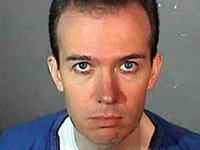 P.S. Please stop showing those creepy photos of Karr. We are having nightmares.
Now that we know John Mark Karr did not kill Jon Benet Ramsey, our short attention span has faded. Can we please move on to a new scandalous and tragic story that has no national or world significance?
Sincerely,
The Public
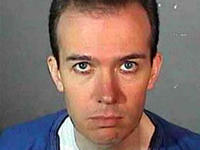 P.S. Please stop showing those creepy photos of Karr. We are having nightmares.
Subscribe to:
Posts (Atom)