What is the Gospel? It is forgiveness when I have been foolish. It is clemency when I have been conceited. It is mercy when I have been murderous. It is God’s protection against my self-preservation. It is God doing the impossible and in doing so he makes much more possible.
What is the Gospel? It is the shocking news that God changes what we know. It is hope for childless parents. It is the favor shown to a slick, self-indulgent scoundrel. It is God sticking with the scoundrel and ushering him into a cosmic agenda greater than he could have imagined. It is the blessing of a new, unstained name. It is the vindication of the golden boy who is unfairly criticized and mistreated. It is mercy and provision for jealous critics. It is freedom from tyrants and liberation from captivities that make us less than human.
What is the Gospel? It is God’s forbearance when I have been forgetful. It is God’s extreme patience when I have been downright stupid. It is God’s willingness to listen to my prayers and maybe even be convinced by them.
What is the Gospel? It is God using me to bless others. It is God entrusting an ordinary, average person with the care and protection of precious souls. It is God graciously not “stripping me of rank” when I abuse my authority. It is God not taking me away from my people or taking them away from me. It is God standing close by even when I know I have failed him. It is God cleansing my heart from the scum of sin.
What is the Gospel? It is God giving wisdom for nothing but the asking. It is the promise that punishment does not last forever. It is the promise that things will get better. It is the restoration of hopes and dreams. It is the joy of hard work doing what God has called you to do. It is purpose that gives meaning to struggle.
What is the Gospel? It is hope within scandal. It is the underclass turning the world over. It is a new reality of a world ruled by this same God. It is a king who fights for me. It is the death sentence for death and the end of evil. It is an “in-your-face” humiliation of the destroyer. It is the old and dying born again. It is the beginning of eternity.
What is the Gospel? It is you and I living in peace and truly made friends. It is my loved ones and I no longer afraid of others. It is the freedom to be a slave. It is the wealth of sacrificing. It is the abundance of self-denial. It is a God who does the impossible and in doing so makes much more possible. The gospel is hope kept alive, happiness restored, and love enduring forever.
What is the Gospel? Just when we have known the evil that we thought would never happen, the gospel is the good we thought could never be possible.
Thursday, January 18, 2007


Wednesday, January 17, 2007
Coining Phrases
I offer some handy new phrases in the midst of the University of Arkansas football soap opera.
Recalling how the media often refers the news about celebrity couples with a single name such as "Brangelina" and "Bennifer," I recommend that "Gustain" might be used to describe the latest regarding our now departed coach and quarterback.
We need a similar name for our head coach and athletic director but I cannot decide which is better: "Noyles" or "Frankston." Not really jazzed about either one of those.
Since the whole story is likened to a soap opera I recommend the following:
All My Quarterbacks
Days of Our Linebackers
. . . . or going the old political scandal route:
Razor-gate
I know its sad and maddening, but we gotta have some sense of humor.
Recalling how the media often refers the news about celebrity couples with a single name such as "Brangelina" and "Bennifer," I recommend that "Gustain" might be used to describe the latest regarding our now departed coach and quarterback.
We need a similar name for our head coach and athletic director but I cannot decide which is better: "Noyles" or "Frankston." Not really jazzed about either one of those.
Since the whole story is likened to a soap opera I recommend the following:
All My Quarterbacks
Days of Our Linebackers
. . . . or going the old political scandal route:
Razor-gate
I know its sad and maddening, but we gotta have some sense of humor.
Wednesday, January 10, 2007
Critique of Belief
Copied below is an article from the Wall Street Journal that analyzes the nature and attitude of some contemporary atheists. See my comments following . . .
Without God, Gall Is Permitted
By SAM SCHULMAN
Wall Street Journal
January 5, 2007; Page W11
When the very first population of atheists roamed the earth in the Victorian age -- brought to life by Lyell's "Principles of Geology," Darwin's "Origin of Species" and other blows to religious certainty -- it was the personal dimension of atheism that others found distressing. How could an atheist's oath of allegiance to the queen be trusted? It couldn't -- so an atheist was not allowed to take a seat in Parliament. How could an atheist, unconstrained by a fear of eternal punishment, be held accountable to social norms of behavior? Worse than heretical, atheism was not respectable.
In the 21st century, this no longer seems to be the case. Few acquaintances of Dr. Richard Dawkins, the world's most voluble public atheist, wonder, as they might have a hundred years ago: Can I leave my wife unchaperoned in this man's company? Indeed, the atheists are now looking to turn the tables: They want to make belief itself not simply an object of intellectual derision but a cause for personal embarrassment. A new generation of publicists for atheism has emerged to tell Americans in particular that we should be ashamed to retain a majority of religious believers, that in this way we resemble the benighted, primitive peoples of the Middle East, Africa and South America instead of the enlightened citizens of Western Europe.
Thanks in part to the actions of a few jihadists in September 2001, it is believers who stand accused, not freethinkers. Among the prominent atheists who now sermonize to the believers in their midst are Dr. Dawkins, Daniel C. Dennett ("Breaking the Spell") and Sam Harris ("The End of Faith" and, more recently, "Letter to a Christian Nation"). There are others, too, like Steven Weinberg, the Nobel Prize-winning physicist, Brooke Allen (whose "Moral Minority" was a celebration of the skeptical Founders) and a host of commentators appalled by the Intelligent Design movement. The transcript of a recent symposium on the perils of religious thought can be found at a science Web site called edge.org. There are many themes to the atheist lament. A common worry is the political and social effect of religious belief. To a lot of atheists, the fate of civilization and of mankind depends on their ability to cool -- or better, simply to ban -- the fevered fancies of the God-intoxicated among us. Naturally, the atheists focus their peevishness not on Muslim extremists (who advertise their hatred and violent intentions) but on the old-time Christian religion. ("Wisdom dwells with prudence," the Good Book teaches.) They can always haul out the abortion-clinic bomber if they need a boogeyman; and they can always argue as if all faiths are interchangeable: Persuade American Christians to give up their infantile attachment to God and maybe Muslims will too. In any case, they conclude: God is not necessary, God is impossible and God is not permissible if our society -- or even our species -- is to survive.
What is new about the new atheists? It's not their arguments. Spend as much time as you like with a pile of the recent anti-religion books, but you won't encounter a single point you didn't hear in your freshman dormitory. It's their tone that is novel. Belief, in their eyes, is not just misguided but contemptible, the product of provincial minds, the mark of people who need to be told how to think and how to vote -- both of which, the new atheists assure us, they do in lockstep with the pope and Jerry Falwell.
For them, belief in God is beyond childish, it is unsuitable for children. Today's atheists are particularly disgusted by the religious training of young people -- which Dr. Dawkins calls "a form of child abuse." He even floats the idea that the state should intervene to protect children from their parents' religious beliefs.
For the new atheists, believing in God is a form of stupidity, which sets off their own intelligence. They write as if they were the first to discover that biblical miracles are improbable, that Parson Weems was a fabulist, that religion is full of superstition. They write as if great minds had never before wrestled with the big questions of creation, moral law and the contending versions of revealed truth. They argue as if these questions are easily answered by their own blunt materialism. Most of all, they assume that no intelligent, reflective person could ever defend religion rather than dismiss it. The reviewer of Dr. Dawkins's volume in a recent New York Review of Books noted his unwillingness to take theology seriously, a starting point for any considered debate over religion.
The faith that the new atheists describe is a simple-minded parody. It is impossible to see within it what might have preoccupied great artists and thinkers like Homer, Milton, Michelangelo, Newton and Spinoza -- let alone Aquinas, Dr. Johnson, Kierkegaard, Goya, Cardinal Newman, Reinhold Niebuhr or, for that matter, Albert Einstein. But to pass over this deeper faith -- the kind that engaged the great minds of Western history -- is to diminish the loss of faith too. The new atheists are separated from the old by their shallowness.
To read the accounts of the first generation of atheists is profoundly moving. Matthew Arnold wrote of the "eternal note of sadness" sounded when the "Sea of Faith" receded from human life. In one testament after another -- George Eliot, Carlyle, Hardy, Darwin himself -- the Victorians described the sense of grief they felt when religion goes -- and the keen, often pathetic attempts to replace it by love, by art, by good works, by risk-seeking and -- fatally -- by politics.
God did not exist, they concluded, but there was no denying that this supposed truth was accompanied by a painful sense of being cut off from human fellowship as well as divine love. To counter it, religious figures developed a new kind of mission -- like that of the former unbeliever C.S. Lewis: They could speak to the feeling of longing that unbelief engenders because they understood it -- and sympathized not only with atheism's pain but with the many sensible arguments in its favor.
There is no such sympathy among the new apostles of atheism -- to find it, one has to look to believers. Anyone who has actually taught young people and listened to them knows that it is often the students who come from a trained sectarian background -- Catholic, Orthodox Jewish, Muslim, Mormon -- who are best at grasping different systems of belief and unbelief. Such students know, at least, what it feels like to have such a system, and can understand those who have very different ones. The new atheists remind me of other students from more "open-minded" homes -- rigid, indifferent, puzzled by thought and incapable of sympathy. The new atheists fail too often simply for want of charm or skill. Twenty-first century atheism hasn't found its H.G. Wells or its George Bernard Shaw, men who flattered their audiences, excited them and persuaded them by making them feel intelligent. Here is Sam Harris, for instance, addressing those who wonder if destroying human embryos in the process of stem cell research might be morally dicey: "Your qualms...are obscene."
The atheists say that they are addressing believers. Rationalists all, can they believe that believers would be swayed by such contumely and condescension? They seem instead to be preaching to people exactly like themselves -- a remarkably incurious elite.
Mr. Schulman is publishing director of the American, a magazine of ideas for business leaders.
My Comment:
I appreciate the observation that the atheist writers mentioned seem to regard all religious believers as extremists and fanatics. In fairness, I do not want to make the same type of prejudicial mistake in assuming that all atheists are unsympathetic elitists. Nevertheless, Schulman's article is a worthy critique of recent "pop-atheism" books.
Without God, Gall Is Permitted
By SAM SCHULMAN
Wall Street Journal
January 5, 2007; Page W11
When the very first population of atheists roamed the earth in the Victorian age -- brought to life by Lyell's "Principles of Geology," Darwin's "Origin of Species" and other blows to religious certainty -- it was the personal dimension of atheism that others found distressing. How could an atheist's oath of allegiance to the queen be trusted? It couldn't -- so an atheist was not allowed to take a seat in Parliament. How could an atheist, unconstrained by a fear of eternal punishment, be held accountable to social norms of behavior? Worse than heretical, atheism was not respectable.
In the 21st century, this no longer seems to be the case. Few acquaintances of Dr. Richard Dawkins, the world's most voluble public atheist, wonder, as they might have a hundred years ago: Can I leave my wife unchaperoned in this man's company? Indeed, the atheists are now looking to turn the tables: They want to make belief itself not simply an object of intellectual derision but a cause for personal embarrassment. A new generation of publicists for atheism has emerged to tell Americans in particular that we should be ashamed to retain a majority of religious believers, that in this way we resemble the benighted, primitive peoples of the Middle East, Africa and South America instead of the enlightened citizens of Western Europe.
Thanks in part to the actions of a few jihadists in September 2001, it is believers who stand accused, not freethinkers. Among the prominent atheists who now sermonize to the believers in their midst are Dr. Dawkins, Daniel C. Dennett ("Breaking the Spell") and Sam Harris ("The End of Faith" and, more recently, "Letter to a Christian Nation"). There are others, too, like Steven Weinberg, the Nobel Prize-winning physicist, Brooke Allen (whose "Moral Minority" was a celebration of the skeptical Founders) and a host of commentators appalled by the Intelligent Design movement. The transcript of a recent symposium on the perils of religious thought can be found at a science Web site called edge.org. There are many themes to the atheist lament. A common worry is the political and social effect of religious belief. To a lot of atheists, the fate of civilization and of mankind depends on their ability to cool -- or better, simply to ban -- the fevered fancies of the God-intoxicated among us. Naturally, the atheists focus their peevishness not on Muslim extremists (who advertise their hatred and violent intentions) but on the old-time Christian religion. ("Wisdom dwells with prudence," the Good Book teaches.) They can always haul out the abortion-clinic bomber if they need a boogeyman; and they can always argue as if all faiths are interchangeable: Persuade American Christians to give up their infantile attachment to God and maybe Muslims will too. In any case, they conclude: God is not necessary, God is impossible and God is not permissible if our society -- or even our species -- is to survive.
What is new about the new atheists? It's not their arguments. Spend as much time as you like with a pile of the recent anti-religion books, but you won't encounter a single point you didn't hear in your freshman dormitory. It's their tone that is novel. Belief, in their eyes, is not just misguided but contemptible, the product of provincial minds, the mark of people who need to be told how to think and how to vote -- both of which, the new atheists assure us, they do in lockstep with the pope and Jerry Falwell.
For them, belief in God is beyond childish, it is unsuitable for children. Today's atheists are particularly disgusted by the religious training of young people -- which Dr. Dawkins calls "a form of child abuse." He even floats the idea that the state should intervene to protect children from their parents' religious beliefs.
For the new atheists, believing in God is a form of stupidity, which sets off their own intelligence. They write as if they were the first to discover that biblical miracles are improbable, that Parson Weems was a fabulist, that religion is full of superstition. They write as if great minds had never before wrestled with the big questions of creation, moral law and the contending versions of revealed truth. They argue as if these questions are easily answered by their own blunt materialism. Most of all, they assume that no intelligent, reflective person could ever defend religion rather than dismiss it. The reviewer of Dr. Dawkins's volume in a recent New York Review of Books noted his unwillingness to take theology seriously, a starting point for any considered debate over religion.
The faith that the new atheists describe is a simple-minded parody. It is impossible to see within it what might have preoccupied great artists and thinkers like Homer, Milton, Michelangelo, Newton and Spinoza -- let alone Aquinas, Dr. Johnson, Kierkegaard, Goya, Cardinal Newman, Reinhold Niebuhr or, for that matter, Albert Einstein. But to pass over this deeper faith -- the kind that engaged the great minds of Western history -- is to diminish the loss of faith too. The new atheists are separated from the old by their shallowness.
To read the accounts of the first generation of atheists is profoundly moving. Matthew Arnold wrote of the "eternal note of sadness" sounded when the "Sea of Faith" receded from human life. In one testament after another -- George Eliot, Carlyle, Hardy, Darwin himself -- the Victorians described the sense of grief they felt when religion goes -- and the keen, often pathetic attempts to replace it by love, by art, by good works, by risk-seeking and -- fatally -- by politics.
God did not exist, they concluded, but there was no denying that this supposed truth was accompanied by a painful sense of being cut off from human fellowship as well as divine love. To counter it, religious figures developed a new kind of mission -- like that of the former unbeliever C.S. Lewis: They could speak to the feeling of longing that unbelief engenders because they understood it -- and sympathized not only with atheism's pain but with the many sensible arguments in its favor.
There is no such sympathy among the new apostles of atheism -- to find it, one has to look to believers. Anyone who has actually taught young people and listened to them knows that it is often the students who come from a trained sectarian background -- Catholic, Orthodox Jewish, Muslim, Mormon -- who are best at grasping different systems of belief and unbelief. Such students know, at least, what it feels like to have such a system, and can understand those who have very different ones. The new atheists remind me of other students from more "open-minded" homes -- rigid, indifferent, puzzled by thought and incapable of sympathy. The new atheists fail too often simply for want of charm or skill. Twenty-first century atheism hasn't found its H.G. Wells or its George Bernard Shaw, men who flattered their audiences, excited them and persuaded them by making them feel intelligent. Here is Sam Harris, for instance, addressing those who wonder if destroying human embryos in the process of stem cell research might be morally dicey: "Your qualms...are obscene."
The atheists say that they are addressing believers. Rationalists all, can they believe that believers would be swayed by such contumely and condescension? They seem instead to be preaching to people exactly like themselves -- a remarkably incurious elite.
Mr. Schulman is publishing director of the American, a magazine of ideas for business leaders.
My Comment:
I appreciate the observation that the atheist writers mentioned seem to regard all religious believers as extremists and fanatics. In fairness, I do not want to make the same type of prejudicial mistake in assuming that all atheists are unsympathetic elitists. Nevertheless, Schulman's article is a worthy critique of recent "pop-atheism" books.
Wednesday, January 03, 2007
The Bizarro Bowl
As long as we are stuck with the ineffective Bowl Championship Series and have no hope of a playoff I say we at least add one more bowl game to the series. This Bowl would go to the teams with big goose eggs on the W side of the column. For instance, this year it would allow Duke (0-12) and Florida International (0-12) to match up.
Think of the wonder of it! Everyone loves the underdog, so why not put two underdogs in the pit. The struggle would be dynamic because after it is over there would be a clear national loser. No more with the endless debates about who has the "losing-est" team.
The toughest part will be finding a corporate sponsor.
Think of the wonder of it! Everyone loves the underdog, so why not put two underdogs in the pit. The struggle would be dynamic because after it is over there would be a clear national loser. No more with the endless debates about who has the "losing-est" team.
The toughest part will be finding a corporate sponsor.
Friday, December 15, 2006
Apocalypse Noel
This is the time of year when all parents have an ally in establishing their authority. I speak of course of the mysterious and ancient Northman in his scarlet wizard’s cap who descends upon us flying through the skies from his cold and barren keep in the land of eternal night. He arrives swiftly and unseen; no barrier, no bolt or lock can hinder him in his mission to dispense justice. If you are good, you get rewarded, but if you are bad – you will be given a token of your sins – a chuck of black anthracite of a bundle of dry tree limbs! Beware these symbols for “they do convict ye of your sins!”
Do not doubt it! The ancient texts confirm it. They are ominous and fearful in their apocalyptic warning: “O, you had better watch out! O, you had better not cry! You had better not pout, and I am telling you why! Santa Claus is coming to town. He knows when you are sleeping, he knows when you are awake, he knows when you are bad or good so be good for goodness sake!”
These are the pleading words of the old prophet Gene Autry imploring children to correct their ways before the night time approach of the wizened agent of justice; this annual judge who rains down blessings and curses. The first words of the text describe it: “You had better watch out!”
In March or July warning a child that Santa is watching just does not carry much weight. Yet in December the threat of his arrival can leverage good behavior. I still get chills when I recall my grandmother warning us that if we did not immediately improve our behavior then we could be certain that the long-bearded, red-vested, obese arbiter of vengeance would deliver us a bag of switches and cornbread. (I never quite understood the cornbread part).
Do not doubt it! The ancient texts confirm it. They are ominous and fearful in their apocalyptic warning: “O, you had better watch out! O, you had better not cry! You had better not pout, and I am telling you why! Santa Claus is coming to town. He knows when you are sleeping, he knows when you are awake, he knows when you are bad or good so be good for goodness sake!”
These are the pleading words of the old prophet Gene Autry imploring children to correct their ways before the night time approach of the wizened agent of justice; this annual judge who rains down blessings and curses. The first words of the text describe it: “You had better watch out!”
In March or July warning a child that Santa is watching just does not carry much weight. Yet in December the threat of his arrival can leverage good behavior. I still get chills when I recall my grandmother warning us that if we did not immediately improve our behavior then we could be certain that the long-bearded, red-vested, obese arbiter of vengeance would deliver us a bag of switches and cornbread. (I never quite understood the cornbread part).
Monday, December 04, 2006
The Nativity
Scott Smith from the Southwest Times Record called me last week to get my take on "The Nativity." It's the latest spiritually-themed movie out of Hollywood. I wanted to post his article here but I cannot seem to find it online. If I can get an electronic version of the article and I am allowed to post it I will do so. Otherwise, you'll just have to settle for the printed edition of the SWTR for Dec. 2, 2006.
Wednesday, November 01, 2006
Random Reflections on Redeeming Halloween
I am weary of the assertion that Halloween is sinful. With each year I grow more impatient with the protest the Halloween is "Hell's Holiday" or the "Devil's Night."
It is naive and inconsistent to single out Halloween as the troublesome holiday. (I respect the Jehovah's Witness in so far as they reject all holidays. They are at least consistent in their protestation). Nearly every major holiday has commendable and lamentable qualities; not only with regard to history but also modern practice. For instance, Halloween is disparaged for having pagan roots. What traditional holidays, other than the national holidays, do not have pagan roots? Christmas is infused with pagan elements borrowed from the feast of Saturnalia. Valentine’s Day is associated with the Lupercalia fertility festival. Even the symbols of Easter originate from various pagan fertility cults. The only real difference is that bunnies and eggs are cuter than skulls and witches, even though they are just as pagan.
Some argue that we can forgive the other holidays of their unfortunate pagan roots because they honor family or participate in the spirit of giving. First, I am not so sure that Christmas and Valentine’s are about giving as much as they are about getting. The modern practice of both has become co-opted by raging consumerism. Second, Halloween may not imbibe of the same degree of family spirit as Christmas and Thanksgiving, but Halloween does have a spirit of community that few holidays enjoy. Halloween traditions still rely on the concept of the neighborhood. On what other day or night can children come to the doors of neighbors without feeling like intruders? Sharing is encouraged. But of course we have to X-Ray the candy and beware of the ever-present danger of the razor blade in the apple, yes? Come on, hasn’t the Internet taught us to be wary of urban legends?
My memories of Halloween are good. My birthday is on Halloween, and perhaps this is why I want to redeem it from the slander. It is a great day for your birthday as a child. You get gifts. You get to dress up as your favorite character and everyone celebrates your birthday. Even the stories I have heard about Halloween’s past entertain me. My father grew up in southern New York and I always loved to hear his tales of the Halloween pranks that he and his buddies contrived. He even remembers hearing how his father and his comrades hoisted the sheriff’s Model T up on the church house on Halloween night. No one was harmed. No one was shot. Maybe there were some messes and inconvenience, but it wasn’t criminal. And in all of those stories I don’t recall any reflection on Samhain, the Druids, warlocks, or . . . . SATAN! Satan is not any more or less active on October 31 than he is on any other day of the year.
Halloween is a traditional event, but it is also just any other day. A day with good and evil and a day waiting to be redeemed . . . just like every day.
It is naive and inconsistent to single out Halloween as the troublesome holiday. (I respect the Jehovah's Witness in so far as they reject all holidays. They are at least consistent in their protestation). Nearly every major holiday has commendable and lamentable qualities; not only with regard to history but also modern practice. For instance, Halloween is disparaged for having pagan roots. What traditional holidays, other than the national holidays, do not have pagan roots? Christmas is infused with pagan elements borrowed from the feast of Saturnalia. Valentine’s Day is associated with the Lupercalia fertility festival. Even the symbols of Easter originate from various pagan fertility cults. The only real difference is that bunnies and eggs are cuter than skulls and witches, even though they are just as pagan.
Some argue that we can forgive the other holidays of their unfortunate pagan roots because they honor family or participate in the spirit of giving. First, I am not so sure that Christmas and Valentine’s are about giving as much as they are about getting. The modern practice of both has become co-opted by raging consumerism. Second, Halloween may not imbibe of the same degree of family spirit as Christmas and Thanksgiving, but Halloween does have a spirit of community that few holidays enjoy. Halloween traditions still rely on the concept of the neighborhood. On what other day or night can children come to the doors of neighbors without feeling like intruders? Sharing is encouraged. But of course we have to X-Ray the candy and beware of the ever-present danger of the razor blade in the apple, yes? Come on, hasn’t the Internet taught us to be wary of urban legends?
My memories of Halloween are good. My birthday is on Halloween, and perhaps this is why I want to redeem it from the slander. It is a great day for your birthday as a child. You get gifts. You get to dress up as your favorite character and everyone celebrates your birthday. Even the stories I have heard about Halloween’s past entertain me. My father grew up in southern New York and I always loved to hear his tales of the Halloween pranks that he and his buddies contrived. He even remembers hearing how his father and his comrades hoisted the sheriff’s Model T up on the church house on Halloween night. No one was harmed. No one was shot. Maybe there were some messes and inconvenience, but it wasn’t criminal. And in all of those stories I don’t recall any reflection on Samhain, the Druids, warlocks, or . . . . SATAN! Satan is not any more or less active on October 31 than he is on any other day of the year.
Halloween is a traditional event, but it is also just any other day. A day with good and evil and a day waiting to be redeemed . . . just like every day.
Monday, October 30, 2006
Pray for Our Neighbors
Our neighbors are in need of prayer. West-Ark's neighbor is the University of Arkansas Fort Smith. They are right across the street from our church building. They use our parking lot during the week. We have a ministry dedicated to UAFS students, the Lions for Christ. I like to think that we are good neighbors.
Over the weekend, a UAFS student was gunned down at a Halloween party. His name is Terrist Parramore. He came to UA Fort Smith from Fort Worth to play basketball for the university. As of this writing, he is in critical condition in Sparks Hospital. Parramore was shot because he stood up for others. Another man at the party was mistreating women. Parramore asked him to stop. The man returned with a teenaged friend who shot Parramore. You can read the full story here, here or here.
I haven't met Terrist, but I am praying for him. I am praying for his family, his teammates, his coaches, and all of our "neighbors" across the street.
Over the weekend, a UAFS student was gunned down at a Halloween party. His name is Terrist Parramore. He came to UA Fort Smith from Fort Worth to play basketball for the university. As of this writing, he is in critical condition in Sparks Hospital. Parramore was shot because he stood up for others. Another man at the party was mistreating women. Parramore asked him to stop. The man returned with a teenaged friend who shot Parramore. You can read the full story here, here or here.
I haven't met Terrist, but I am praying for him. I am praying for his family, his teammates, his coaches, and all of our "neighbors" across the street.
Monday, September 11, 2006
Prayer of Jabez
I remember what I was doing on Sept. 10, 2001. Yes, the tenth - not the eleventh. I was reading a little book that was all the rage on the Christian book charts: The Prayer of Jabez.
I was alone that night. My wife was working at the fitness center daycare that evening and she had the boys with her. I took dinner at the El Chico in the shopping mall. I had just picked up a copy of the book at Hastings. I came home and finished reading the book in my easy chair and reflected on what I had read. For my family, it was a time that we were seriously concerned about finances and feeling unfocused about our future. I have never been a believer in the success gospel, but talk of "expanding territories" and "blessings indeed" were very appealing to me then.
I understand that many people have found the Prayer of Jabez beneficial and have truly been blessed because of the discipline of prayer the book inspired for them. For that reason, I will not knock the the book, but the author of the book admits that the Prayer of Jabez can be misunderstood as a "get-rich-quick" success gospel. I confess that that is where my desires were leading me. I went to sleep meditating on the words of Jabez's prayer and wondering if God was just waiting on me to do "my part" so I could get the rewards.
Of course the next morning I woke up in a different world. A world where wealth and territory did not seem as important. The world of Sept. 10 evaporated. Even though it was only one tower burning at that time, I sensed immediately that America and its values were about to undergo massive change. As I watched the World Trade Center, a symbol of global prosperity, smoke like a burning log I took notice of my wife and my sons and I counted myself blessed indeed.
There was a lot of marketing that surrounded the popularity of the Prayer of Jabez. Among the specialty items sold in conjunction with the book was a prayer coin with the Prayer of Jabez inscribed on it. (It puzzles me how evangelicals will criticize Catholics and Orthodox for their "trinkets and rituals" and then sell their own. Perhaps the difference is all about marketing?) I have one of those coins. I still carry it at times. However, I rarely pray the prayer. I am not opposed to the prayer, it just does not belong to me. It's Jabez's prayer. The coin is my reminder to find my own prayer in my own time and trust in God's answer.
I was alone that night. My wife was working at the fitness center daycare that evening and she had the boys with her. I took dinner at the El Chico in the shopping mall. I had just picked up a copy of the book at Hastings. I came home and finished reading the book in my easy chair and reflected on what I had read. For my family, it was a time that we were seriously concerned about finances and feeling unfocused about our future. I have never been a believer in the success gospel, but talk of "expanding territories" and "blessings indeed" were very appealing to me then.
I understand that many people have found the Prayer of Jabez beneficial and have truly been blessed because of the discipline of prayer the book inspired for them. For that reason, I will not knock the the book, but the author of the book admits that the Prayer of Jabez can be misunderstood as a "get-rich-quick" success gospel. I confess that that is where my desires were leading me. I went to sleep meditating on the words of Jabez's prayer and wondering if God was just waiting on me to do "my part" so I could get the rewards.
Of course the next morning I woke up in a different world. A world where wealth and territory did not seem as important. The world of Sept. 10 evaporated. Even though it was only one tower burning at that time, I sensed immediately that America and its values were about to undergo massive change. As I watched the World Trade Center, a symbol of global prosperity, smoke like a burning log I took notice of my wife and my sons and I counted myself blessed indeed.
There was a lot of marketing that surrounded the popularity of the Prayer of Jabez. Among the specialty items sold in conjunction with the book was a prayer coin with the Prayer of Jabez inscribed on it. (It puzzles me how evangelicals will criticize Catholics and Orthodox for their "trinkets and rituals" and then sell their own. Perhaps the difference is all about marketing?) I have one of those coins. I still carry it at times. However, I rarely pray the prayer. I am not opposed to the prayer, it just does not belong to me. It's Jabez's prayer. The coin is my reminder to find my own prayer in my own time and trust in God's answer.
Monday, August 28, 2006
Stop The Insanity
Dear National Media:
Now that we know John Mark Karr did not kill Jon Benet Ramsey, our short attention span has faded. Can we please move on to a new scandalous and tragic story that has no national or world significance?
Sincerely,
The Public
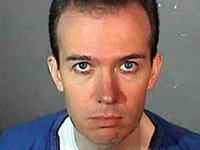 P.S. Please stop showing those creepy photos of Karr. We are having nightmares.
Now that we know John Mark Karr did not kill Jon Benet Ramsey, our short attention span has faded. Can we please move on to a new scandalous and tragic story that has no national or world significance?
Sincerely,
The Public
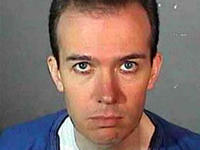 P.S. Please stop showing those creepy photos of Karr. We are having nightmares.
Tuesday, August 01, 2006
Tropical Storm Chris
 They named it after me! Aw, they shouldn't have. Really, they shouldn't have.
There's something creepy about seeing your name given to a destructive force of nature. Of course there have been Tropical Storms and Hurricanes named Chris at least since 1982. According to reports they were all underachievers. Most of the one-line summaries on these cyclones note that they were not significant. The exception would be TS Chris of 1988 which killed four. Even one death isn't insignificant. I hope that TS Chris of 2006 is like the rest of his unambitious family.
Even so, nobody at the National Hurricane Center asked about using my name. I think of all the women named Katrina who now have to live down the dark connotation of this name. I wonder if they grimace or apologize when they announce that their name is Katrina. It could be something to laugh off except that the destruction of Hurricane Katrina and the political fallout that continues today just isn't funny.
This reminds me of my friends whose birthday is September 11. One time in a prayer group a brother shared how he didn't feel like celebrating on his birthday. This was in 2002 and the anniversary of the dark day was as tense as ever. I urged him to redeem the day. Later a friend, a doctor, told me how the terror attacks of 9/11 focused him. September 11 is his birthday and because his birthday was being remembered as a day of unspeakable violence he was devoting his talents to undoing violence. Last I heard he is involved in research to eliminate the threat of bio-terror attacks. That's redeeming the day.
So I have a word of encouragement for every Camille, Carla, Mitch, Andrew, Katrina, and Rita reading my blog: redeem your name. Don't apologize or make an excuse for your name. You are not a storm! You didn't name that cyclone. I am hoping that my cyclone behaves, but if not I guess I need to redeem the "family name."
A postscript to the National Hurricane Center: I do not intend to support theories of emotional stress caused by using actual names, but I will say you have a potential lawsuit on your hands. In a nation that can sue McDonald's for making you fat, I guarantee at some time you will have a class action lawsuit from everyone with a given name if that storm turns out to be a bad one. Besides that, isn't it time to come up with a more creative naming system? Instead of giving storms names from a baby book, why not come up with your own alphabet code like law-enforcement and military/aviation. You are the National Hurricane Center after all. Wouldn't you like to have some cool names like Tango, Bravo, X-Ray, and Foxtrot? If you did you could also use the letters Q, X, Y, and Z and avoid the embarrassing problem of having to use the Greek alphabet.
Thursday, July 27, 2006
"How To Win An Argument" By S. Hussein
 Debate coaches and experts on rhetoric should be paying close attention to the adroit argumentation of Saddam Hussein during his trial. This clever fellow didn't get to be the dictator of Iraq because of a low I.Q. Follow carefully his piercing logic and witty rejoinders and you will recognize his skill at debate. Here are some helpful tips from Saddam:
1. Make Your Opponents Look Like Idiots: During the trial proceedings on Wednesday, Saddam complained that he was brought to the court room against his will from the hospital. Saddam was in the hospital on a hunger strike. Chief Judge Raouf Abdel-Rahman resorted to common sense and evidence when he disagreed with Saddam. The judge produced a medical report showing that Saddam was in fine health. It's at this juncture in the debate that Saddam shows his skill: he replies, "I didn't say I was ill; I was on a hunger strike." Boo-yah, judge! You were thinking it was all about being healthy enough to meet the responsibility of attending a court proceeding, but Saddam made you look like a fool! You have to pay attention judge! There's nothing worse than interrupting a man's hunger strike.
2. Make Up Meaningless Credentials: If you let the facts get in the way, you might lose your debate. For example, Saddam never served in the military. He is a politician, and he did appoint himself a general when he took control of Iraq in 1979. But these facts did not keep him from appealing to the court to remember that he is a military man. Of course he made that point to ask for the privilege of being executed by a firing squad rather than hung like a common criminal. This is of course Saddam's way of saying, "You've already made your minds up." Bravo, Hussein. Work on their sympathy. Can you feel the tears welling up?
3. Occasionally Refer to Yourself in the Third Person. During his appeal for a firing squad, Saddam said "You have to remember that Saddam is a military man and in this case the verdict should be death by shooting not by hanging," he told the judge. On a different occasion he protested his court-appointed attorney by shouting, "Is he a lawyer for Saddam Hussein or the prosecution?" It lends a certain authoritative madness to your line of reasoning when you talk about yourself as another person. Bob Dole tried to do this during the 1992 election. But he cannot hold a candle to Saddam who takes it one step further by telling the whole court his name. Take notes and observe: When the judge accused Saddam of inciting violence against Iraqis, he replied, "I am inciting the killing of Americans and invaders, not the killing of Iraqis." He could have stopped there, but that would be no better than a schoolyard quarrel of the "Yes, you are/No I'm not" variety. So, Saddam adds some style and flourish by exclaiming, "I am Saddam Hussein! I call on Iraqis to be in harmony and work on evicting the invaders." Now that seals an argument, right? "I am Saddam Hussein." Just try it when you are in an argument with your spouse.
4. Use Colorful Expressions: Judge Abdel-Rahman is so enslaved to common sense that it is easy to see why he cannot hold his own against Hussein. In reply to Saddam's rant that he is aiming his faithful at Americans rather than Iraqis, the judge asks the obvious question: ""Why are they attacking Iraqis in coffee shops and markets? Why don't they go detonate themselves among Americans?" Whoa! That's a tough one. It seems like point and match to the judge, but Saddam shows his skill by retorting with a very carefully crafted and vivid expression. He replied to the judge, "This case is not worth the urine of an Iraqi child." Slamdunk! There's the phrase that will win any contest. Yet, such phrases have to be carefully thought out. A novice might say that this case is not worth the urine of a adult Swede, but it takes an expert like Saddam to know the relative value of urines.
Saturday, June 17, 2006
Computer Animated Sin and Redemption
Below is an exerpt from my other blog, The Magic Lantern Show. The film Over The Hedge is a well-made fil that serves as a parable about community. Read on . . .
Sometimes inspiration comes from the strangest of places. Just a few weeks ago I made the decision to join meet my family at the movies. It was a decision, not a whim, because I was in the thick of a seriously overactive schedule and I had to decide that spending 90 minutes of my time at a "kids movie" like Over The Hedge was not unimportant. The 90 minutes would have been important simply because I shared it with my wife and children, but I was additionally blessed by a good movie with an inspiring message.
Over the Hedge is a parable of community. R. J. [the racoon] meets up with a group of friendly forest dwellers made up of a turtle, a skunk, a squirrel, two opossums, and a porcupine family. The odd assortment of beasts live together in utopian harmony as a commune community. They gather just what is needed until R. J. changes that by introducing the forest family to the possibilities of treasures over the hedge. Of course we know that R. J. is exploiting the others to gather what he needs to pay off Vincent. As would be expected, R. J. falls in love with the funny animals and finds community. Which peels off yet another layer of this film: R. J. is revealed as a fraud but he repents by rescuing the others from the evil Verminator. In turn, the forest community rescues R. J. from the clutches of Vincent. How does a community reconcile with a betrayer? How do they restore R. J. to their community when they know he has lied to them?
Am I out of line for saying that this movie was actually better than The DaVinci Code? Sue me for honesty, but I thought that talking animals of Over The Hedge had more depth and sympathy than the bland bunch from DaCode.
Sometimes inspiration comes from the strangest of places. Just a few weeks ago I made the decision to join meet my family at the movies. It was a decision, not a whim, because I was in the thick of a seriously overactive schedule and I had to decide that spending 90 minutes of my time at a "kids movie" like Over The Hedge was not unimportant. The 90 minutes would have been important simply because I shared it with my wife and children, but I was additionally blessed by a good movie with an inspiring message.
Over the Hedge is a parable of community. R. J. [the racoon] meets up with a group of friendly forest dwellers made up of a turtle, a skunk, a squirrel, two opossums, and a porcupine family. The odd assortment of beasts live together in utopian harmony as a commune community. They gather just what is needed until R. J. changes that by introducing the forest family to the possibilities of treasures over the hedge. Of course we know that R. J. is exploiting the others to gather what he needs to pay off Vincent. As would be expected, R. J. falls in love with the funny animals and finds community. Which peels off yet another layer of this film: R. J. is revealed as a fraud but he repents by rescuing the others from the evil Verminator. In turn, the forest community rescues R. J. from the clutches of Vincent. How does a community reconcile with a betrayer? How do they restore R. J. to their community when they know he has lied to them?
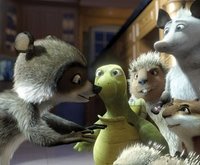
Am I out of line for saying that this movie was actually better than The DaVinci Code? Sue me for honesty, but I thought that talking animals of Over The Hedge had more depth and sympathy than the bland bunch from DaCode.
Tuesday, June 06, 2006
News of The Beast
If you have been looking for the big news of 6.6.06, this may just be it . . .
Lioness in Zoo Kills Man Who Invoked God
06 June 2006
KIEV: A man shouting that God would keep him safe was mauled to death by a lioness in a Kiev zoo after he crept into the animal's enclosure, a zoo official said today.
"The man shouted 'God will save me, if he exists', lowered himself by a rope into the enclosure, took his shoes off and went up to the lions," the official said.
"A lioness went straight for him, knocked him down and severed his carotid artery."
Doesn't this story have it all? A beast, the triple-digit hexaphobic number, and the failure of God to save. I fully expect someone to use this as ironclad proof that God does not exist.
Lioness in Zoo Kills Man Who Invoked God
06 June 2006
KIEV: A man shouting that God would keep him safe was mauled to death by a lioness in a Kiev zoo after he crept into the animal's enclosure, a zoo official said today.
"The man shouted 'God will save me, if he exists', lowered himself by a rope into the enclosure, took his shoes off and went up to the lions," the official said.
"A lioness went straight for him, knocked him down and severed his carotid artery."
Doesn't this story have it all? A beast, the triple-digit hexaphobic number, and the failure of God to save. I fully expect someone to use this as ironclad proof that God does not exist.
Friday, June 02, 2006
Virtual Bard
The Internet. The zenith of humankind's technological achievement at the end of the 20th century. And how, pray tell, has this wondrous marvel of ingenuity benefitted us? As I peer into yon e-mail inbox I see that I can assist the wife of a former Nigerian dictator with a simple bank transaction and as a result earn enough money to end world hunger. I haven't responded to her, but she writes me every day.
Yet, even more astounding than that are the countless offers of cheap medications and stock IPO's. What is even more astounding is that these e-mails are written by robots. Oh yes, pure calculating machines of magnetic bubble logic that churn out random assortments of words and phrases in the thousands by the hour. I am told that these electronic brains do this so as to fool spam filters. Thus the email containing a virus or offer of stolen Viagara slips past the guardian watch of the spam filter in the guise of an actual message. Perhaps most of the random words written by these lit-bots is meaningless filler, but recently a phrase in one of these junk mails from a e-poet struck my eye. Catch your breath as you read the phrase below and behold the evolution of the computer soul! The digital master wrote . . .
I have seen her in the streets, he answered, with a shiver.
Meantime, I put myself on a short allowance of bear's grease.
Pure poetry. Forgive me but I seem to have something in my eye . . .
Yet, even more astounding than that are the countless offers of cheap medications and stock IPO's. What is even more astounding is that these e-mails are written by robots. Oh yes, pure calculating machines of magnetic bubble logic that churn out random assortments of words and phrases in the thousands by the hour. I am told that these electronic brains do this so as to fool spam filters. Thus the email containing a virus or offer of stolen Viagara slips past the guardian watch of the spam filter in the guise of an actual message. Perhaps most of the random words written by these lit-bots is meaningless filler, but recently a phrase in one of these junk mails from a e-poet struck my eye. Catch your breath as you read the phrase below and behold the evolution of the computer soul! The digital master wrote . . .
I have seen her in the streets, he answered, with a shiver.
Meantime, I put myself on a short allowance of bear's grease.
Pure poetry. Forgive me but I seem to have something in my eye . . .
Saturday, May 27, 2006
Screwtape Reads Dan Brown
Some have suggested that I am too hard on Dan Brown and The DaVinci Code. I sort of thought I might be a bit biased myself. Yet, I did not like the book when I read it in 2004. Now that I am reading again I like it even less.
So I went searching for a positive review of the book so I could try and understand why some appreciated it. The most positive review of the book I have found comes from Screwtape. You may remember his best-selling letters that were published by C. S. Lewis in the 1940's. It seems he is still writing and Eric Metaxas has posted a recent letter from Screwtape to his nephew Wormwood on his webpage.
So, in the interest of fairness, I offer a "positive" review of The DaVinci Code.
So I went searching for a positive review of the book so I could try and understand why some appreciated it. The most positive review of the book I have found comes from Screwtape. You may remember his best-selling letters that were published by C. S. Lewis in the 1940's. It seems he is still writing and Eric Metaxas has posted a recent letter from Screwtape to his nephew Wormwood on his webpage.
So, in the interest of fairness, I offer a "positive" review of The DaVinci Code.
Monday, May 22, 2006
A Cup of Cold Air
My mother used to say that something mechanical would break whenever my father left town. The clutch on the truck would go bad; the water lines would burst, etc. My father is a fix-it guy and the big fixes would be needed when he was away.
I hope my family hasn't inherited this curse. Just a day before I was to leave for the Sermon Seminar in Michigan, our air conditioner went out. I knew it was coming. The old blower fan was grunting and groaning under the sever demands I placed on it. Still, I had hoped it would last a bit longer. I am an evil taskmaster when it comes to cold air.
I felt like a heel leaving my family in a warm, muggy house whilst I retreated to the cooler climate of Michigan. But they were troopers and vowed that a a few fans would be just fine. I encouraged my boys my telling them that I grew up without air conditioned comfort and that this experience would be good for their constitution.
At worship yesterday, Russ McConnell and Blake Frost heard of my family's plight. They each had a window AC they were willing to loan me. I thanked them, but I regretted that I wouldn't be able to install the window unit as I was leaving for the airport within an hour. No problem! Russ and David Berger came over last night and put in both window units.
I know that having AC is really just a luxury. I know that most of the world does not enjoy this creature comfort. I know that all of us would be fine without it. But what I appreciate is the thoughtfulness and kindness of these good people who took the time to care for my family. It is comforting to know that we have such a loving and caring church family. Jesus said that the one who offers something as simple as a cup of cold water to a disciple will not lose out on the reward. I think that also applies to a cup of cold air.
Thank you Russ, David, and Blake!
I hope my family hasn't inherited this curse. Just a day before I was to leave for the Sermon Seminar in Michigan, our air conditioner went out. I knew it was coming. The old blower fan was grunting and groaning under the sever demands I placed on it. Still, I had hoped it would last a bit longer. I am an evil taskmaster when it comes to cold air.
I felt like a heel leaving my family in a warm, muggy house whilst I retreated to the cooler climate of Michigan. But they were troopers and vowed that a a few fans would be just fine. I encouraged my boys my telling them that I grew up without air conditioned comfort and that this experience would be good for their constitution.
At worship yesterday, Russ McConnell and Blake Frost heard of my family's plight. They each had a window AC they were willing to loan me. I thanked them, but I regretted that I wouldn't be able to install the window unit as I was leaving for the airport within an hour. No problem! Russ and David Berger came over last night and put in both window units.
I know that having AC is really just a luxury. I know that most of the world does not enjoy this creature comfort. I know that all of us would be fine without it. But what I appreciate is the thoughtfulness and kindness of these good people who took the time to care for my family. It is comforting to know that we have such a loving and caring church family. Jesus said that the one who offers something as simple as a cup of cold water to a disciple will not lose out on the reward. I think that also applies to a cup of cold air.
Thank you Russ, David, and Blake!
Friday, May 19, 2006
Pseudo-Fiction
English doesn't allow double negatives, right? A double negative is actually a positive, yes? So if I "don't never" use double negatives I actually do because I do not never use them.
Remembering this rather logical lesson from grammar has helped me classify the genre of Dan Brown's The DaVinci Code. Currently, no one can agree if DaCode is fiction or non-fiction. Brown claims it is fiction - as do many of the book's naysayers. However, Brown also prefaces the book with a "fact" page that intends to root the fictional adventures of Robert Langdon within a factual setting. So, is DaCode fact or fiction?
I read Dan Brown's claim of fiction as a double negative. The first negative is the "fact" page which has very little basis in fact. The second negative is the claim that Dan Brown intended to write fiction. He has said on an ABC interview that if he had written the book as non-fiction he would have changed none of the details of the conspiracy and historical interpretation. This makes it hard to classify the genre of DaCode, but I propose we create a new genre for DaCode and its ilk: pseudo-fiction. A pseudo-fiction is "false-false." It is false fiction; which means, according to the rule of double negative, it is non-fiction. Note that I did not say it was true or fact. We have no such category when it comes to literature, unless you include reference materials. However, reference materials and non-fiction works are subject to scrutiny.
The point of proposing the "pseudo-fiction" genre is to get around the claim of Brown and others that DaCode is "just fiction." It isn't fair to simply claim that something is fiction when it pretends to be more. Is it really justifiable for anyone to write a slanderous tale about a public figure and then try to claim that it is "just fiction." That defense is offered by children on the playground who apologize for their malicious actions by retorting, "I'm just joking!"
DaCode is not "just fiction." It makes more claims than "just fiction" and so it is subject to the same scrutiny as non-fiction. That shouldn't bother Dan Brown though. As fiction, DaCode is a bore. As pseudo-fiction, the book has generated worthwhile conversation about non-fictional subjects of lasting importance.
Remembering this rather logical lesson from grammar has helped me classify the genre of Dan Brown's The DaVinci Code. Currently, no one can agree if DaCode is fiction or non-fiction. Brown claims it is fiction - as do many of the book's naysayers. However, Brown also prefaces the book with a "fact" page that intends to root the fictional adventures of Robert Langdon within a factual setting. So, is DaCode fact or fiction?
I read Dan Brown's claim of fiction as a double negative. The first negative is the "fact" page which has very little basis in fact. The second negative is the claim that Dan Brown intended to write fiction. He has said on an ABC interview that if he had written the book as non-fiction he would have changed none of the details of the conspiracy and historical interpretation. This makes it hard to classify the genre of DaCode, but I propose we create a new genre for DaCode and its ilk: pseudo-fiction. A pseudo-fiction is "false-false." It is false fiction; which means, according to the rule of double negative, it is non-fiction. Note that I did not say it was true or fact. We have no such category when it comes to literature, unless you include reference materials. However, reference materials and non-fiction works are subject to scrutiny.
The point of proposing the "pseudo-fiction" genre is to get around the claim of Brown and others that DaCode is "just fiction." It isn't fair to simply claim that something is fiction when it pretends to be more. Is it really justifiable for anyone to write a slanderous tale about a public figure and then try to claim that it is "just fiction." That defense is offered by children on the playground who apologize for their malicious actions by retorting, "I'm just joking!"
DaCode is not "just fiction." It makes more claims than "just fiction" and so it is subject to the same scrutiny as non-fiction. That shouldn't bother Dan Brown though. As fiction, DaCode is a bore. As pseudo-fiction, the book has generated worthwhile conversation about non-fictional subjects of lasting importance.
Wednesday, May 17, 2006
No Greater Love
The Memorial Day observances begin early this month. Our nation has designated this week as a time to remember the men and women of our police forces. Today was Police Officer Memorial Day in Fort Smith.
I was honored to be a part of a small but meaningful service at the Fort Smith Police Department today. There have been nine men who died in the line of duty during the history of the FSPD. For the record they are . . .
E. A. "Gus" Anthony, Andy Carr, Samuel Booth, William Bourland, Ralph Howard, Thomas Hairston, Randy Basnett, Ray Tate, and Billy Simms.
I first learned of these men when I was teaching an Ethics in-service for the FSPD. They have a display case in the front lobby that memorializes these officers. Nine souls may not seem like too many in the long history of Fort Smith. The dates of their deaths range from the early 1900's to 1986. Nevertheless, each of them is a man with family and friends. Jesus said that there is no greater love that to lay down one's life for one's friends.
Those officers that I know who are a part of the Fort Smith PD today I consider friends. May God bless them and protect them as they risk their lives out of love and duty.
I was honored to be a part of a small but meaningful service at the Fort Smith Police Department today. There have been nine men who died in the line of duty during the history of the FSPD. For the record they are . . .
E. A. "Gus" Anthony, Andy Carr, Samuel Booth, William Bourland, Ralph Howard, Thomas Hairston, Randy Basnett, Ray Tate, and Billy Simms.
I first learned of these men when I was teaching an Ethics in-service for the FSPD. They have a display case in the front lobby that memorializes these officers. Nine souls may not seem like too many in the long history of Fort Smith. The dates of their deaths range from the early 1900's to 1986. Nevertheless, each of them is a man with family and friends. Jesus said that there is no greater love that to lay down one's life for one's friends.
Those officers that I know who are a part of the Fort Smith PD today I consider friends. May God bless them and protect them as they risk their lives out of love and duty.
Monday, May 15, 2006
Dusting Off the Cap and Gown
Two years ago I graduated from Abilene Christian University with my doctorate in ministry. I purchased the required academic regalia for the ceremony. These are by no means the most practical articles of clothing I have ever owned. The hood, for example, is emblazoned with the colors of your school and your field of study. It wraps around your neck and hangs down your back. I cannot fathom how this piece of clothing can be called a hood. Maybe it would serve well as a hood if my head were three feet in diameter. Likewise the cap is not the sort of item I could wear out on the lake or during cold weather. At least our caps as doctoral grads were the eight-sided tams. They have more style than the weird skullcap with a square attached to it. Who would ever design a hat like this. If we didn't immediately associate this cap with graduation I swear that this hat would look like something from the wardrobe of a bad science-fiction movie.
So after I wore the cap, gown, and hood for my graduation two years ago I thought I would never wear them again. Why would I? My answer came about a month ago when I was asked to lead the invocation and benediction for the University of Arkansas Fort Smith graduation. Strangely, I didn't feel out of place in my sci-fi attire because it was the fashion of the day. It was an honor and privilege to serve UA Fort Smith at graduation. West-Ark Church of Christ and UA Fort Smith are becoming good neighbors and that is a blessing for us.
I will don my attire in a few weeks when I serve as the graduation speaker for Webster University. They have just five graduates this year and they all insisted on wearing the funny caps and gowns. I guess there is something about this silly attire that gives one a sense of achievement. I will be happy to honor the graduates of Webster by wearing my regalia also . . . and I also want to get my money's worth from it.
So after I wore the cap, gown, and hood for my graduation two years ago I thought I would never wear them again. Why would I? My answer came about a month ago when I was asked to lead the invocation and benediction for the University of Arkansas Fort Smith graduation. Strangely, I didn't feel out of place in my sci-fi attire because it was the fashion of the day. It was an honor and privilege to serve UA Fort Smith at graduation. West-Ark Church of Christ and UA Fort Smith are becoming good neighbors and that is a blessing for us.
I will don my attire in a few weeks when I serve as the graduation speaker for Webster University. They have just five graduates this year and they all insisted on wearing the funny caps and gowns. I guess there is something about this silly attire that gives one a sense of achievement. I will be happy to honor the graduates of Webster by wearing my regalia also . . . and I also want to get my money's worth from it.
Subscribe to:
Posts (Atom)